
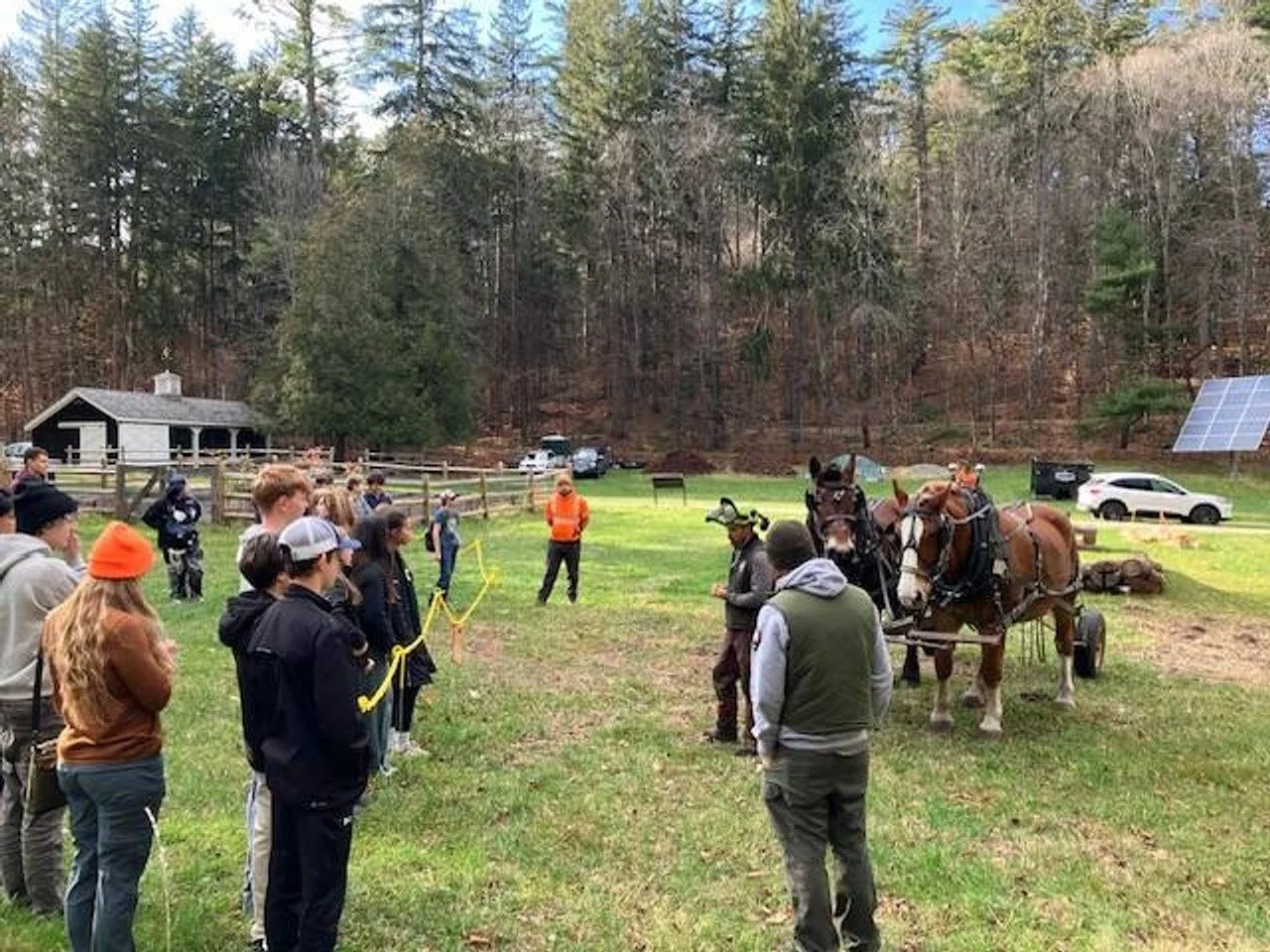
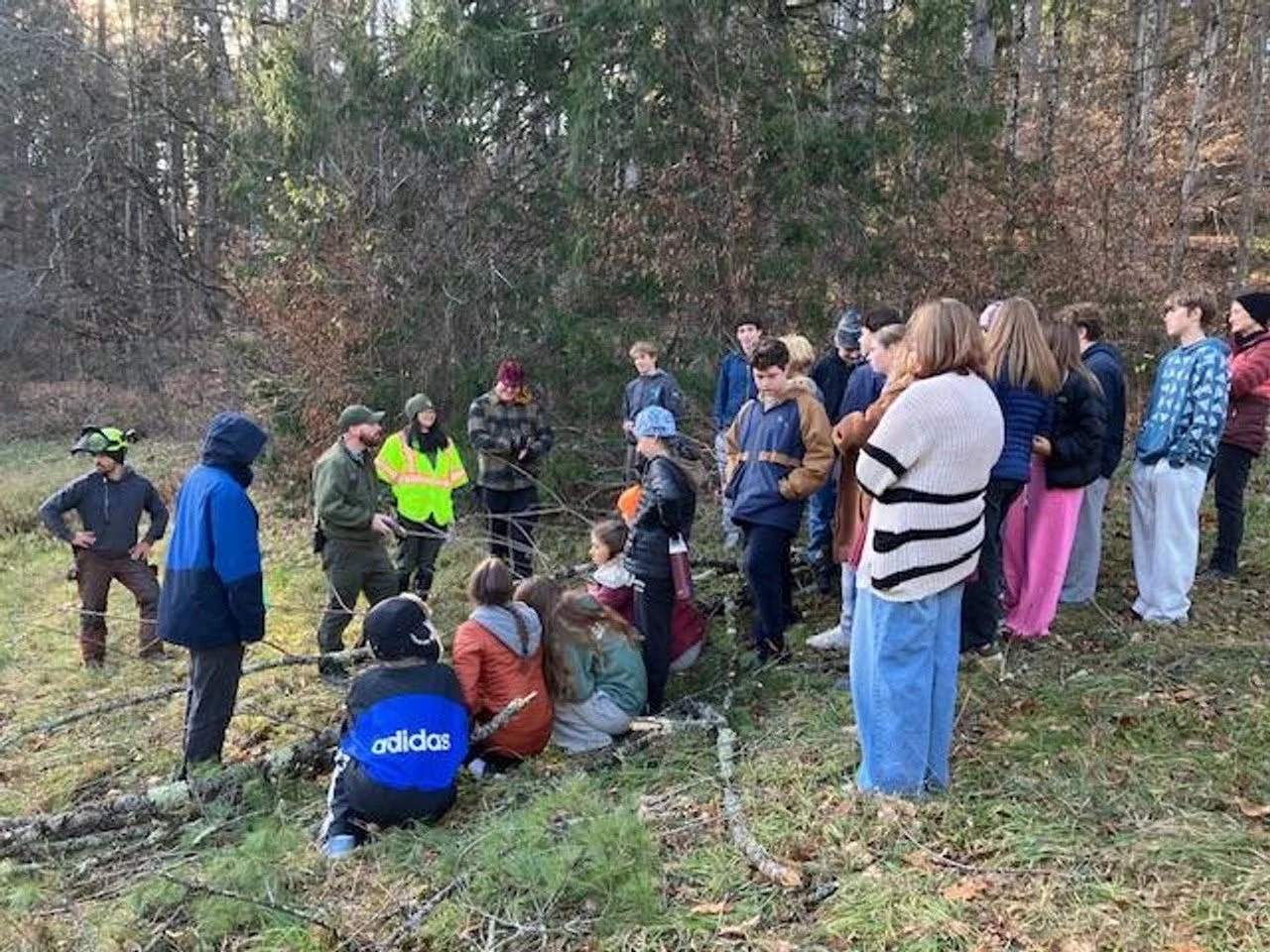
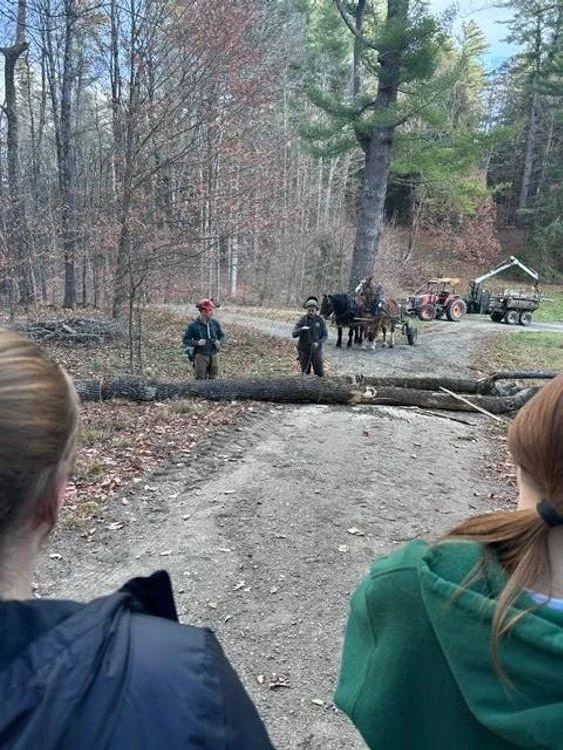
Kate, Ned, and a forwarder greeted Integrated Environmental Science students as they entered the log landing at Marsh-Billings-Rockefeller National Historical Park. Kate and Ned are one-ton Belgian workhorses guided by logger Derek O’Toole. Derek and park natural resource managers Steve Mortillo and Annie Huang shared their story of stewardship toward increasing forest health in the longest, continuously managed scientific forest in the United States.
Students noticed that the two stacks of logs were only composed of white ash, which is facing a severe threat from the Emerald Ash Borer. The park is removing all ash within 80 feet of a carriage road because their health is quickly declining and they could become hazardous to visitors. The ash will go to several different markets including True Temper to make tool handles, firewood, and milled locally to be distributed to school woodshops and maker spaces, including the WUSHMS Innovation Lab.
Mortillo compared the forest to a garden with the need for thinning and maintenance as well as the importance of sourcing your wood locally, much like you can purchase your carrots and eggs from a local farm. This can avoid importing exotic pests as well as maintaining the economic viability of small-scale, low-impact logging in Vermont.