
School news
From inspiration to illustration: digital artists at work
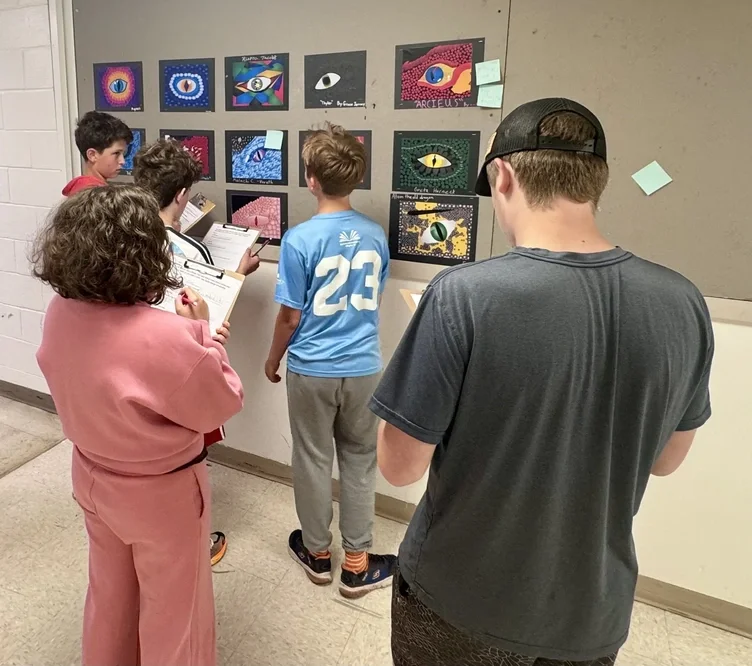
Middle School Digital Art students recently completed a project that introduced them to the creative process used by graphic artists and designers. They began by developing mood boards, combining images, colors, textures, and ideas to communicate a particular feeling or visual style. Students then learned how designers extract color palettes from inspiration images and use those colors intentionally to create a unified design.
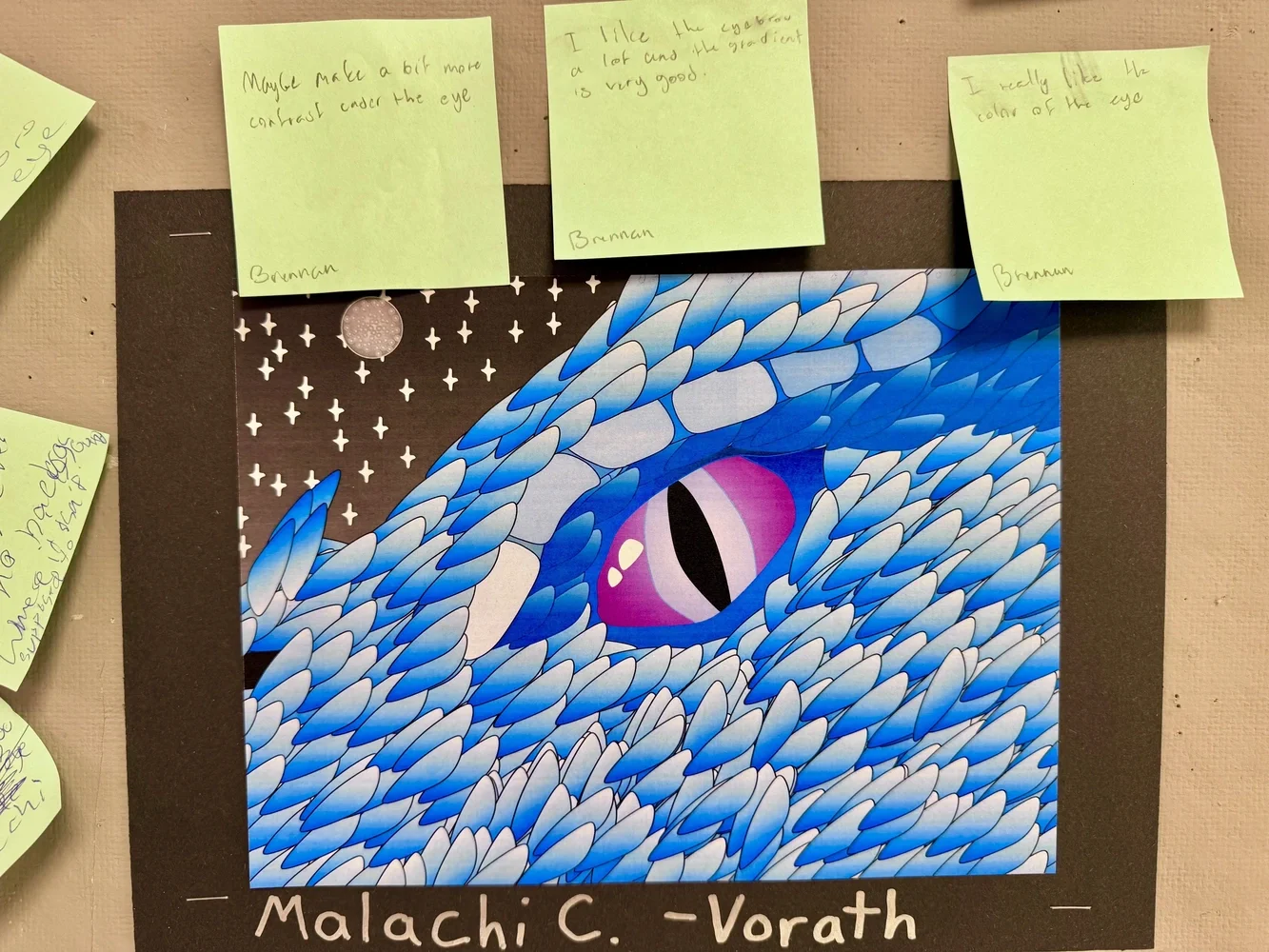
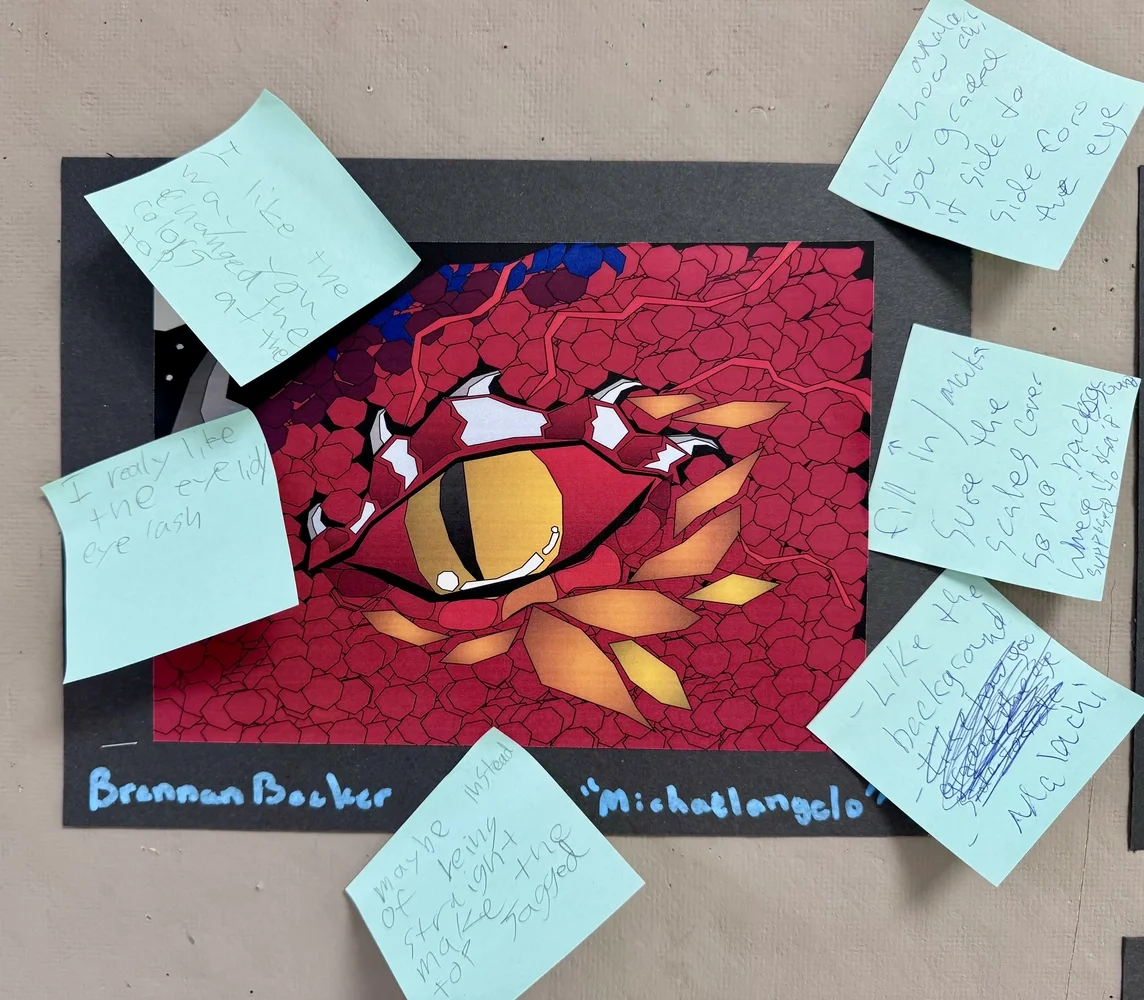
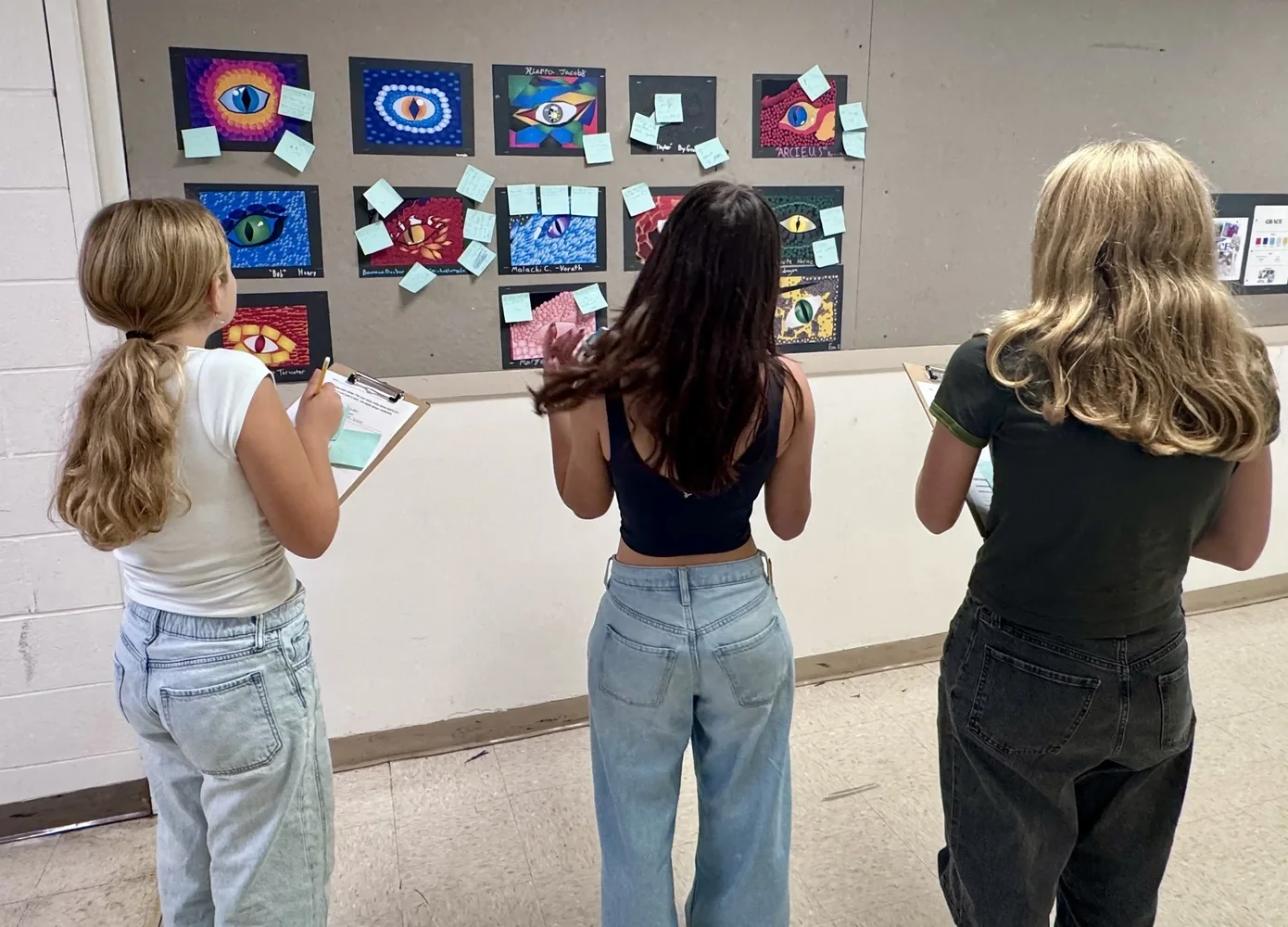
Students applied these skills in Google Draw by creating detailed dragon eyes entirely from simple shapes. They learned to analyze a complex image, break it into manageable parts, and build it one shape at a time. By resizing, rotating, duplicating, grouping, and layering shapes, students transformed basic digital elements into original illustrations. They also used gradients, highlights, shadows, color, and texture to create depth, realism, and personality.
Although the finished dragon eyes are imaginative, the skills behind them have important real-world applications. Graphic designers, illustrators, advertisers, web designers, animators, architects, and many other professionals must plan visual ideas, use digital tools, solve design problems, organize complex projects, and revise their work with care. Students practiced all of these skills while also developing persistence, precision, creative decision-making, and confidence with technology.
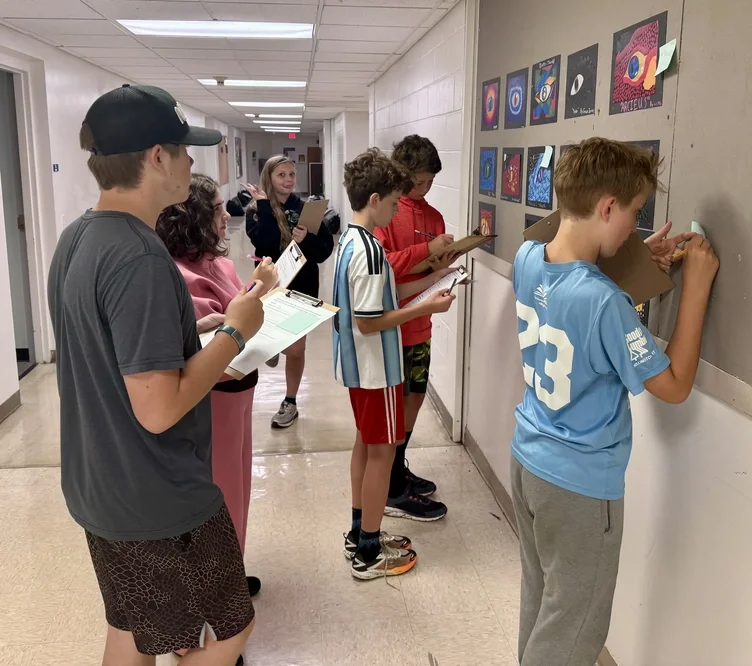
One of the most important parts of the project was learning how to give and receive meaningful feedback through “Two Glows and a Grow.” Students identified two specific strengths in a classmate’s work and offered one constructive suggestion for growth.
This process helped students understand that professional creative work rarely happens in isolation. Artists and designers collaborate, communicate, respond to feedback, and revise their ideas to make them stronger.
The resulting dragon eyes showcase much more than creativity. They demonstrate how digital art helps students become thoughtful visual communicators, flexible problem-solvers, supportive collaborators, and capable creators in an increasingly visual and technology-driven world.
What happens when a photographer can’t see?

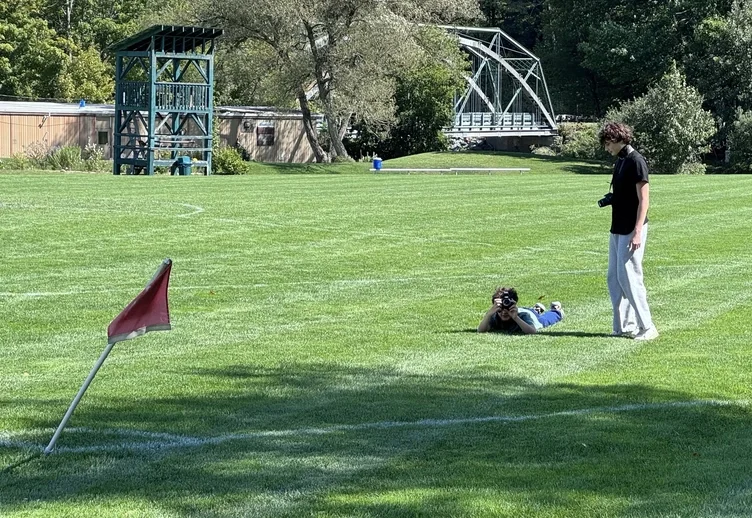
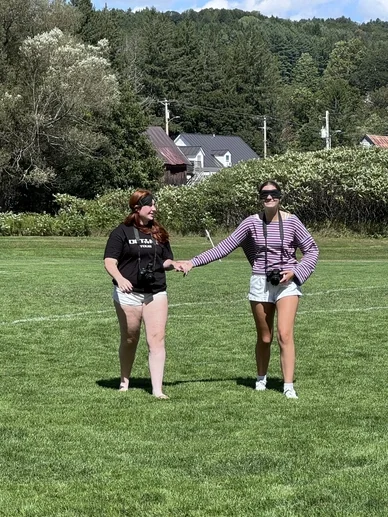
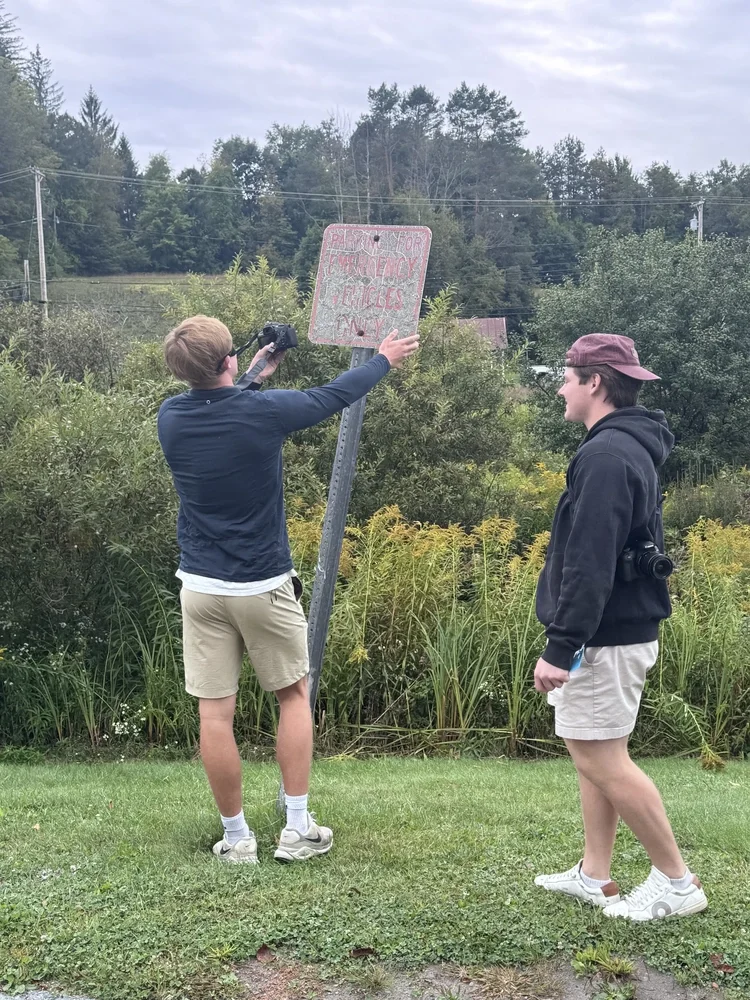
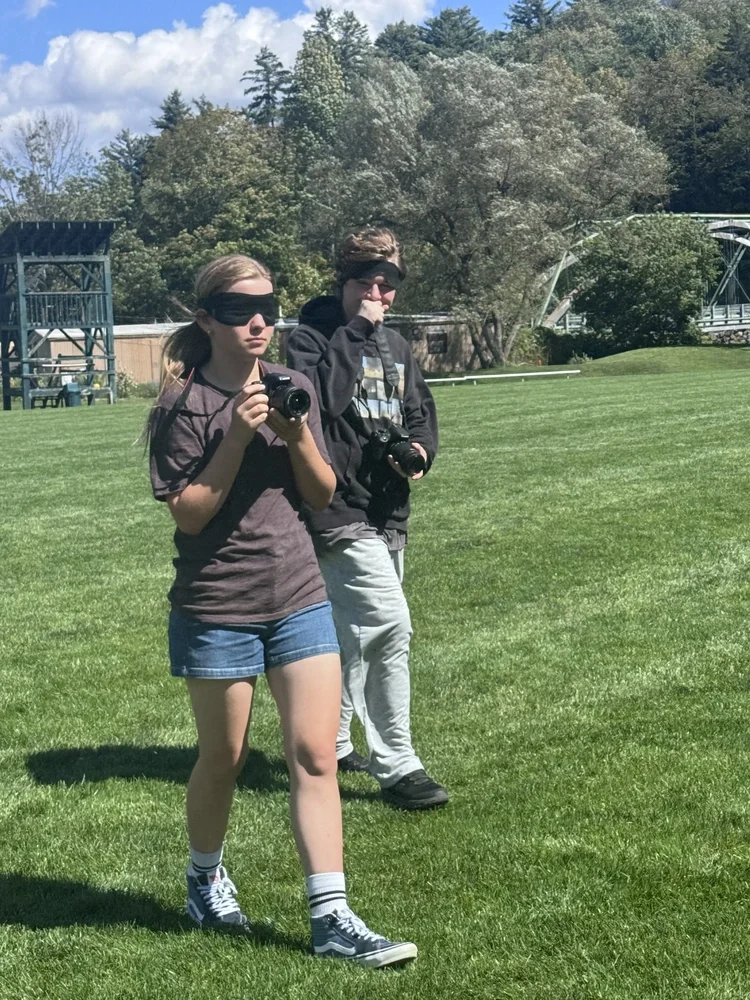
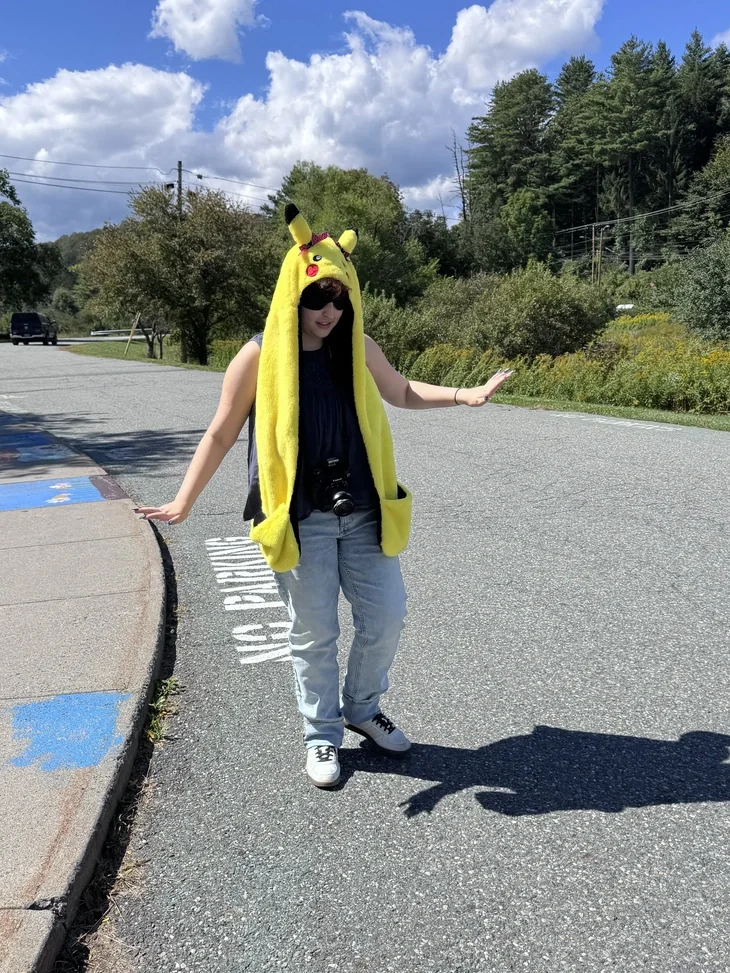
This week, photography students traded their eyes for their other senses!
We began by learning about Pete Eckert, a professional photographer who is completely blind, and exploring the idea of the mind’s eye. His work challenged us to think differently about photography. Does a photographer actually need to see to create an interesting photograph? And is a great photograph always about making a “pretty picture”? Watch the video about his work with Volkswagen here.
Then it was time to find out for ourselves! Students worked in pairs and took turns being blindfolded while their partner served as a “seeing-eye human” to help them safely navigate the school campus. The photographer, however, was on their own when it came to making the art. Instead of looking for something interesting, students had to listen, feel, smell, and even taste their surroundings, using those sensory clues to decide where to point their cameras and when to press the shutter. The lesson challenged students to experiment, take creative risks, and experience familiar surroundings in an entirely different way.
Most importantly, students discovered that photography is for everyone. Pete Eckert's work reminds us that having a disability does not prevent someone from being an artist. There isn't just one way to experience the world, and there isn't just one way to make a photograph.
Afterward, students looked at what their cameras captured, selected their favorite images, and reflected on what it felt like to photograph without relying on sight. During our critique, we'll even identify which sensory experiences seem strongest in the resulting photographs.
Sometimes taking away the ability to look helps us learn how to really see.
Prehistoric Caves: AP Art History
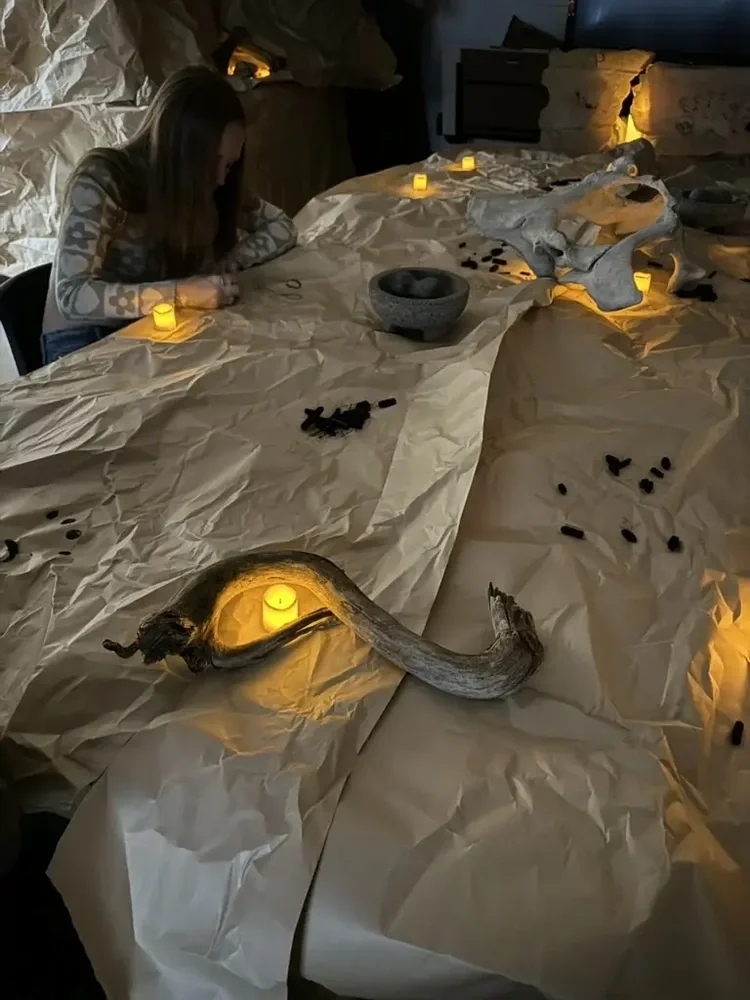
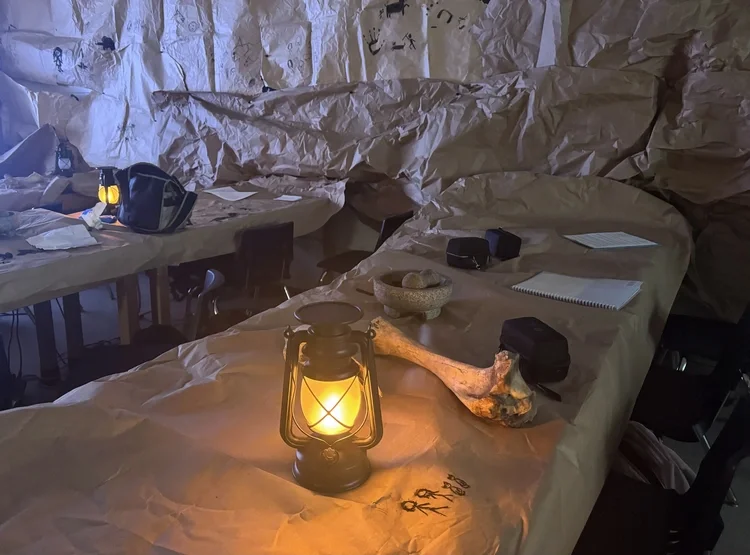
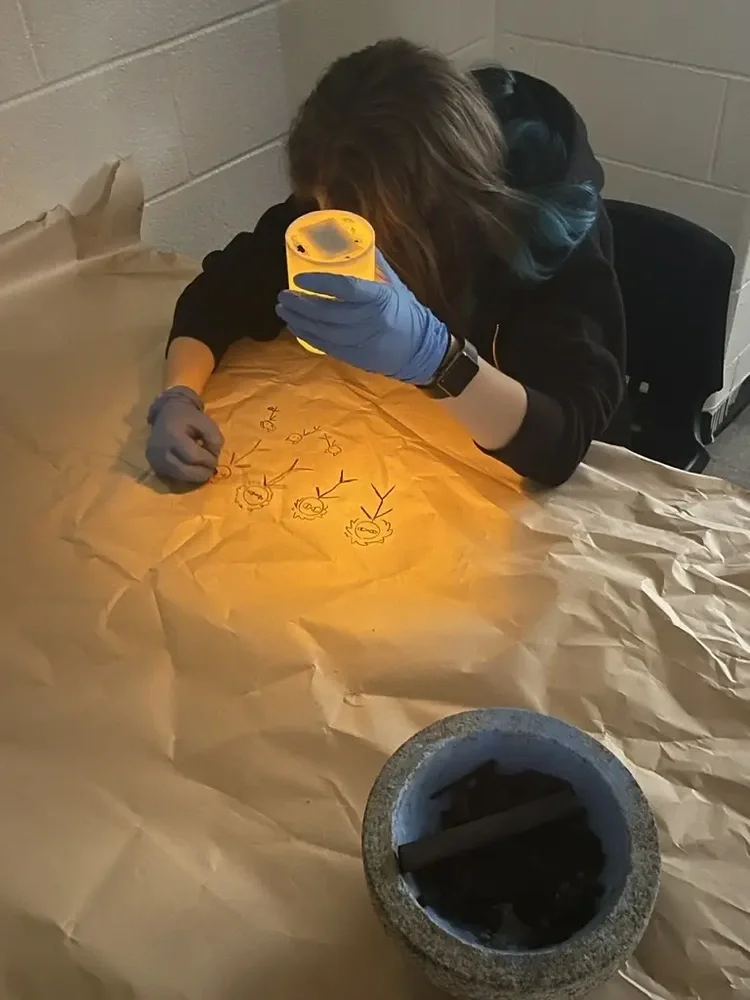
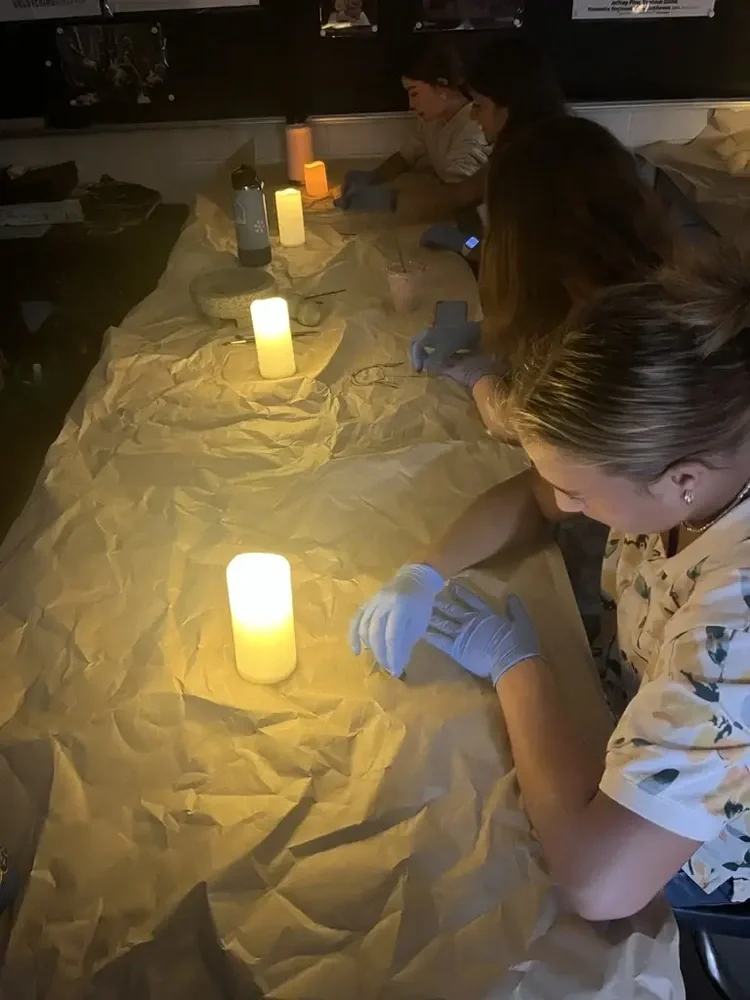
What better way to begin AP Art History than by stepping back in time? On the first day of class, our art room was transformed into a prehistoric cave as students explored art created before the written record.
As we studied these early cultures, we talked about an important idea: the absence of writing does not mean the absence of intelligence, organization, creativity, or complex thought. Long before written histories, humans were making images, creating objects, and communicating ideas through art. This ability to intentionally create and preserve meaning through images and objects is one of the extraordinary characteristics of being human. Art gives us a window into what people valued, believed, experienced, and wanted others to remember.
That is what makes AP Art History so exciting. Students learn to slow down and really look, notice details, question assumptions, make connections, and support their ideas with evidence. Those skills extend far beyond art and history and are valuable for future doctors, lawyers, scientists, and anyone whose work requires careful observation and critical thinking.
And art history doesn't happen only in our classroom! Students have opportunities to experience art firsthand at the Museum of Fine Arts, Boston; The Clark Art Institute; Marsh-Billings-Rockefeller National Historical Park; and the Hall Art Foundation. Seeing an artwork in person allows students to experience its scale, texture, space, and presence in a way a screen simply can't replicate.
Our prehistoric cave was just the beginning. In AP Art History, we don't just learn about the past. We learn to look closely at what people left behind and discover the human stories they still have to tell.
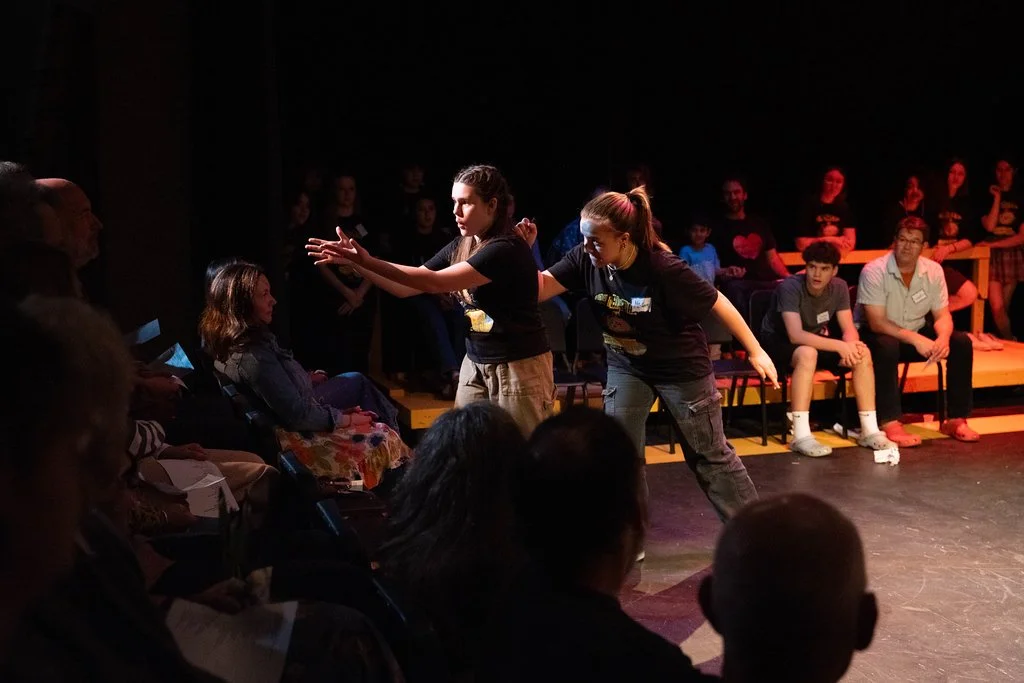
Yoh theater announces 2026-2027 season
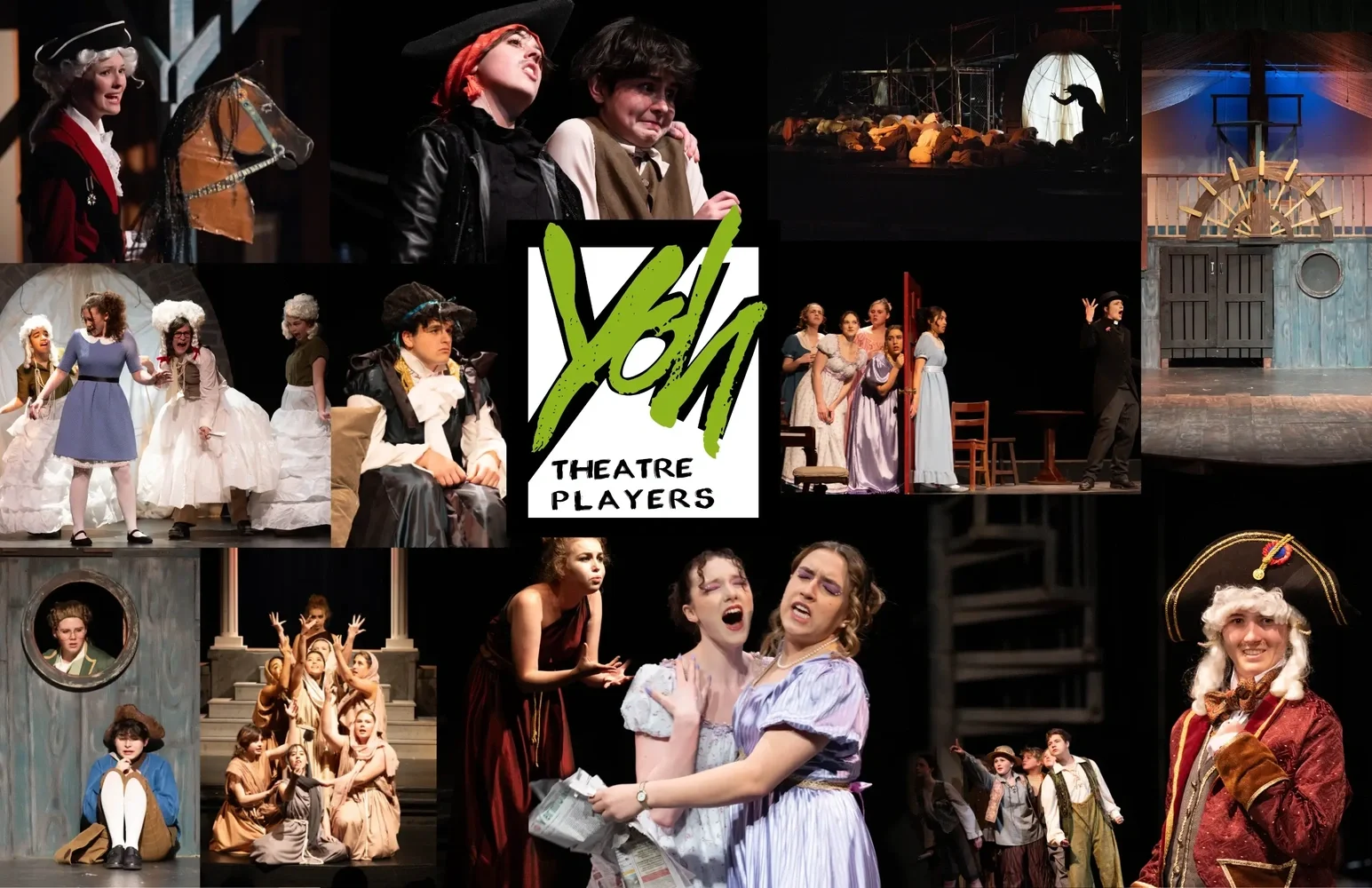
Yoh Theatre Players are back with a five-show lineup for the 2026-27 season, spanning epic seafaring adventure, sprawling family comedy, real-life drama, and a beloved musical. All performances take place in the WUHSMS auditorium.
The Old Man and The Old Moon
October 16, 17 (7PM), 18 (2PM) — by Pigpen Theatre Co.
The Old Man has kept watch over the moon for as long as anyone can remember. When his wife is drawn away by a mysterious melody, he must choose between duty and love in this imaginative, sea-faring epic full of storms, ghosts, and change.
The Skin of Our Teeth
December 11, 12 (7PM), 13 (2PM) — by Thornton Wilder
This 4th wall-breaking comedy follows the Antrobus family through 20,000 years of history — the Ice Age, Noah's Flood, and the apocalypse of WWII — offering hope that humanity can find a way through any calamity.
The Farnsworth Invention
March 5, 6 (7PM), 7 (2PM) — by Aaron Sorkin
The story of the teenager who invented television and the broadcasting titan who stole the patent from him. Sorkin's crackling dialogue drives the action from Idaho's potato fields to the highest ranks of the RCA boardroom.
In Transit
April 30, May 1 (7PM), May 2 (2PM) — by Anderson-Lopez, Ford, Kaplan, Wordsworth
A musical celebrating the interrelated stories of New Yorkers moving through the city's streets and subways — a love letter to New York and the people who make it up.
Into the Woods Jr.
May 21, 22 (7PM) — youth adaptation by Stephen Sondheim and James Lapine A 7th/8th/9th grade show
Be careful what you wish for! This lyrically rich retelling of classic Brothers Grimm fables brings together Cinderella, Little Red Riding Hood, Jack, and the Witch.
Eco artists create baskets with Sue Lenfest
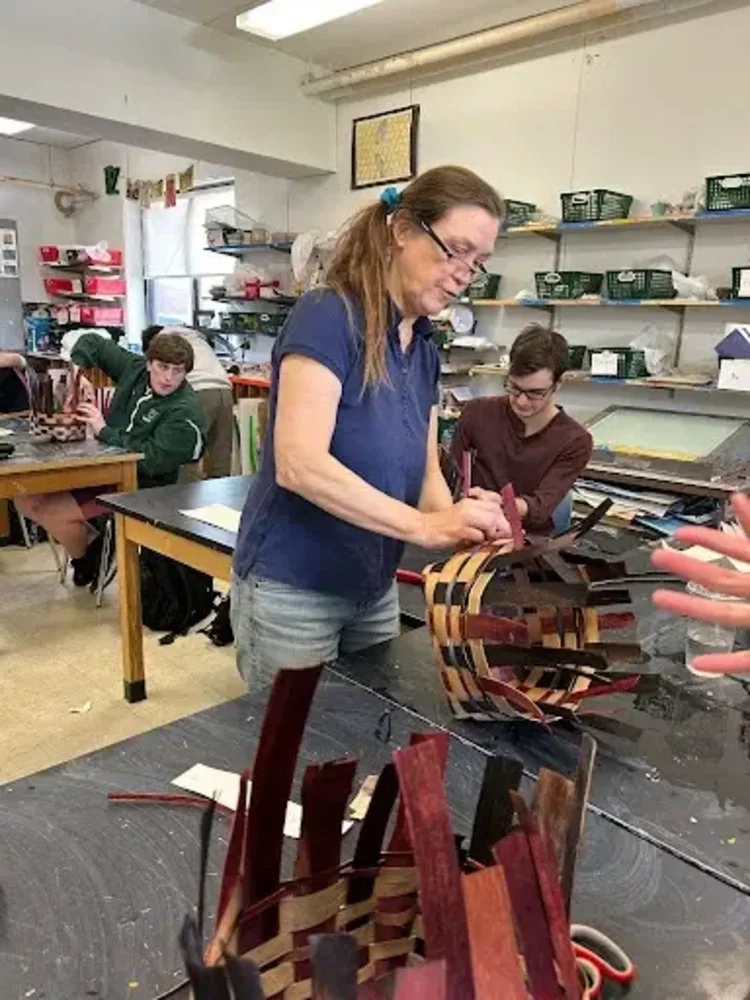
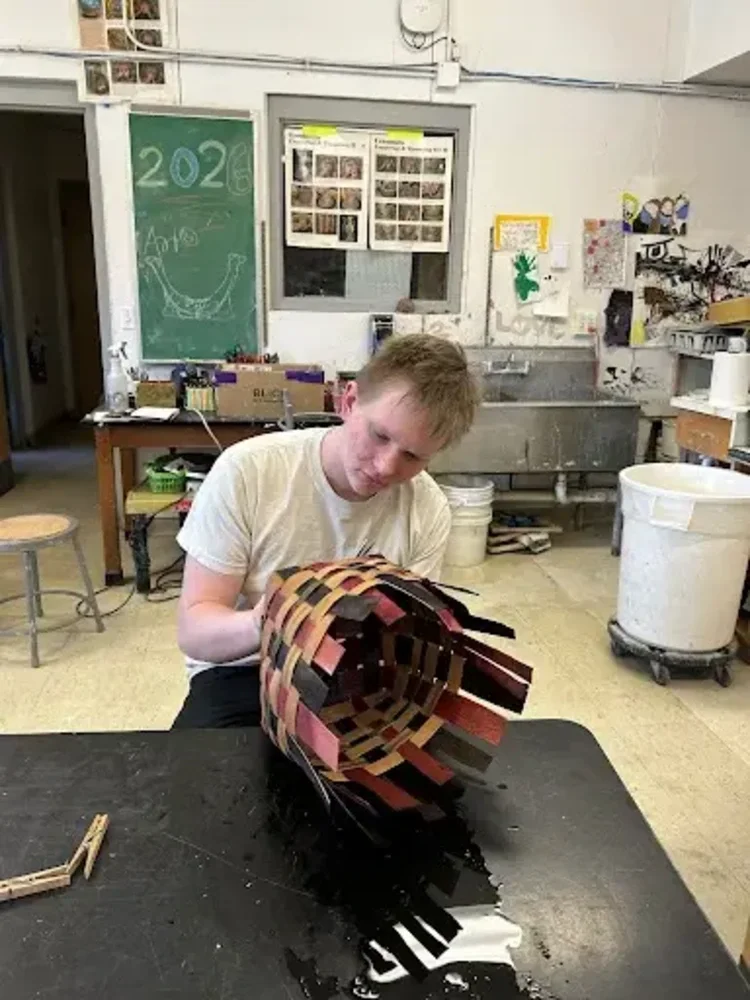
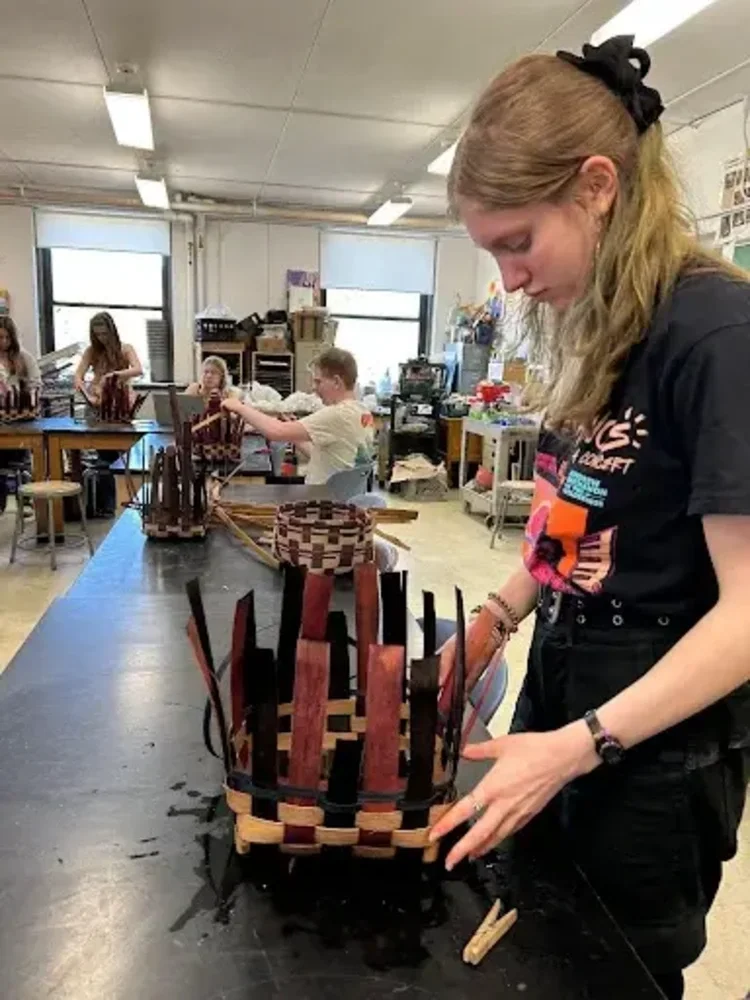
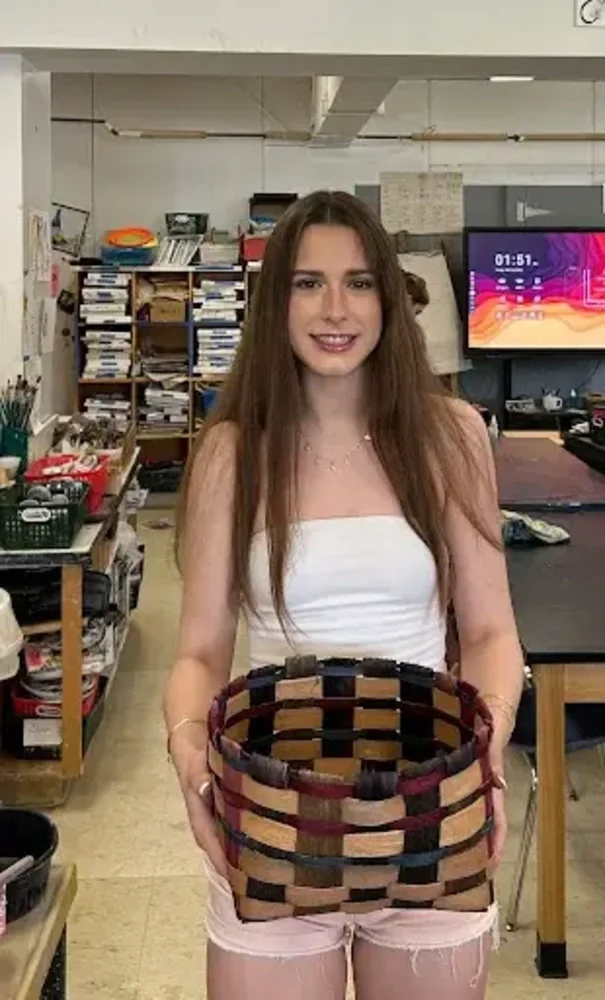
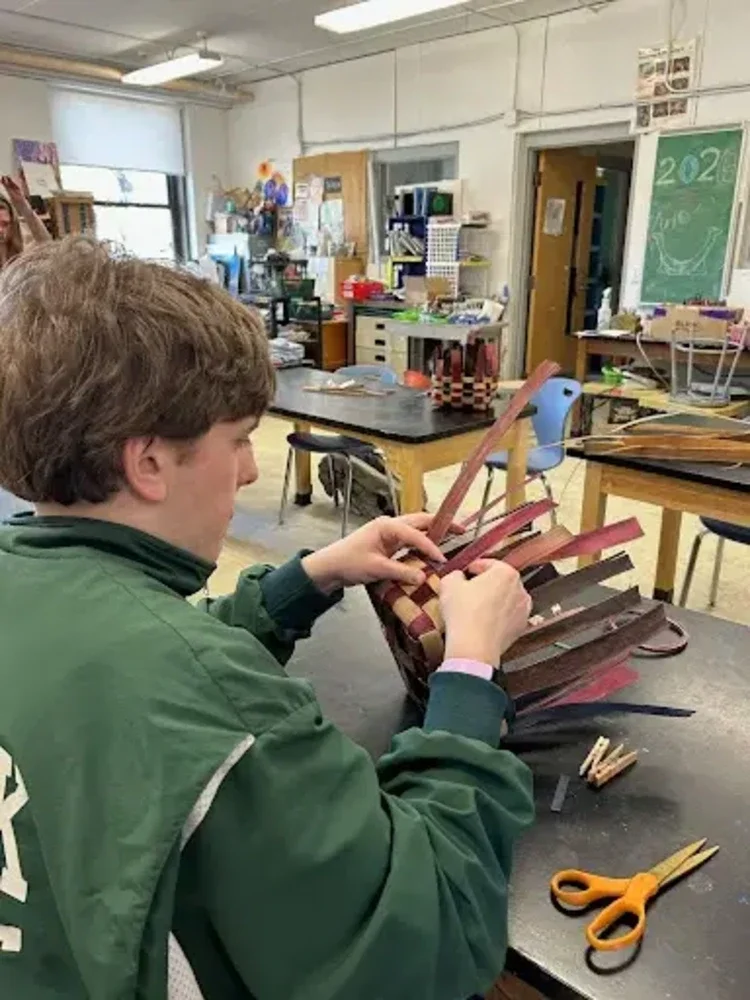
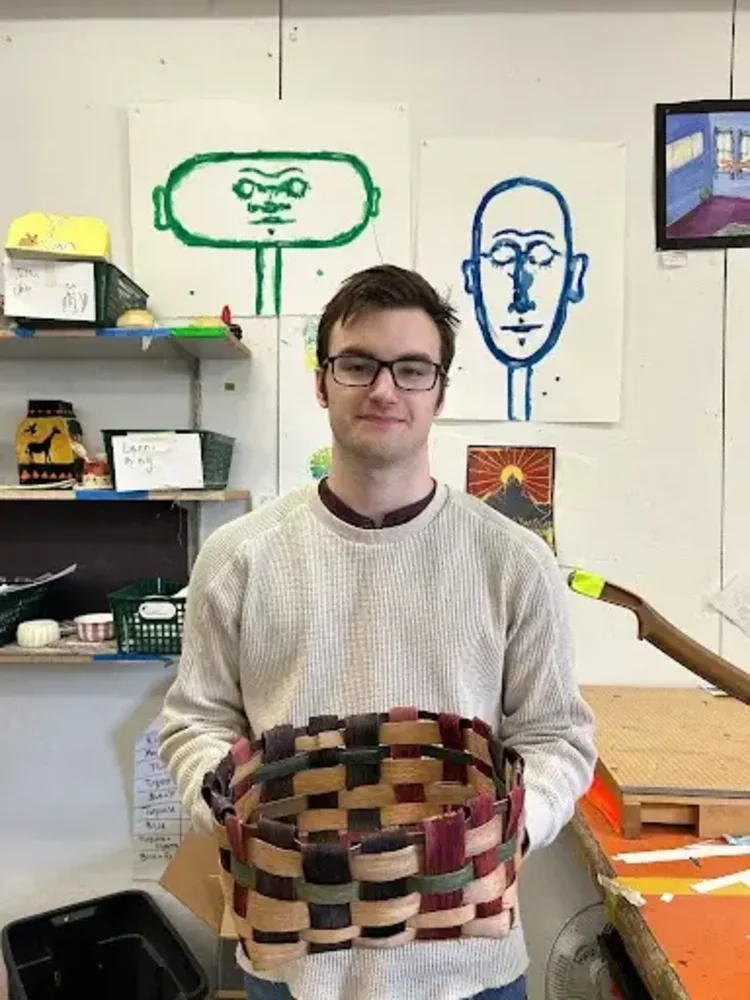
The EcoArt class recently had the opportunity to work with visiting local artist and basketmaker Sue Lenfest in a hands-on basketry workshop. With many years of experience, including learning from Indigenous artists, she guided students through the process of traditional basketmaking.
Sue harvested black ash trees herself, prepared the splints used for weaving, and incorporated natural dyes to add color. Through this experience, students connected directly with the materials, techniques, and traditions of basketry, gaining a deeper understanding of the relationship between land, craft, and culture.
Black ash trees are central to Abenaki culture. Their unique growth rings allow logs to be pounded into usable strips that are strong, flexible, and long-lasting. For the Abenaki, ash trees are deeply connected to identity, place, and origin stories, and each basket reflects the story of its maker.
Students also learned about the emerald ash borer, an invasive beetle that is threatening ash tree populations. Scientists, Indigenous basketmakers, and local communities are working together to monitor and slow its spread, harvest affected trees, treat healthy ones, support Indigenous forest stewardship, and preserve seeds for future forests.