
School news
9th graders study connection between carbon cycle and food insecurity
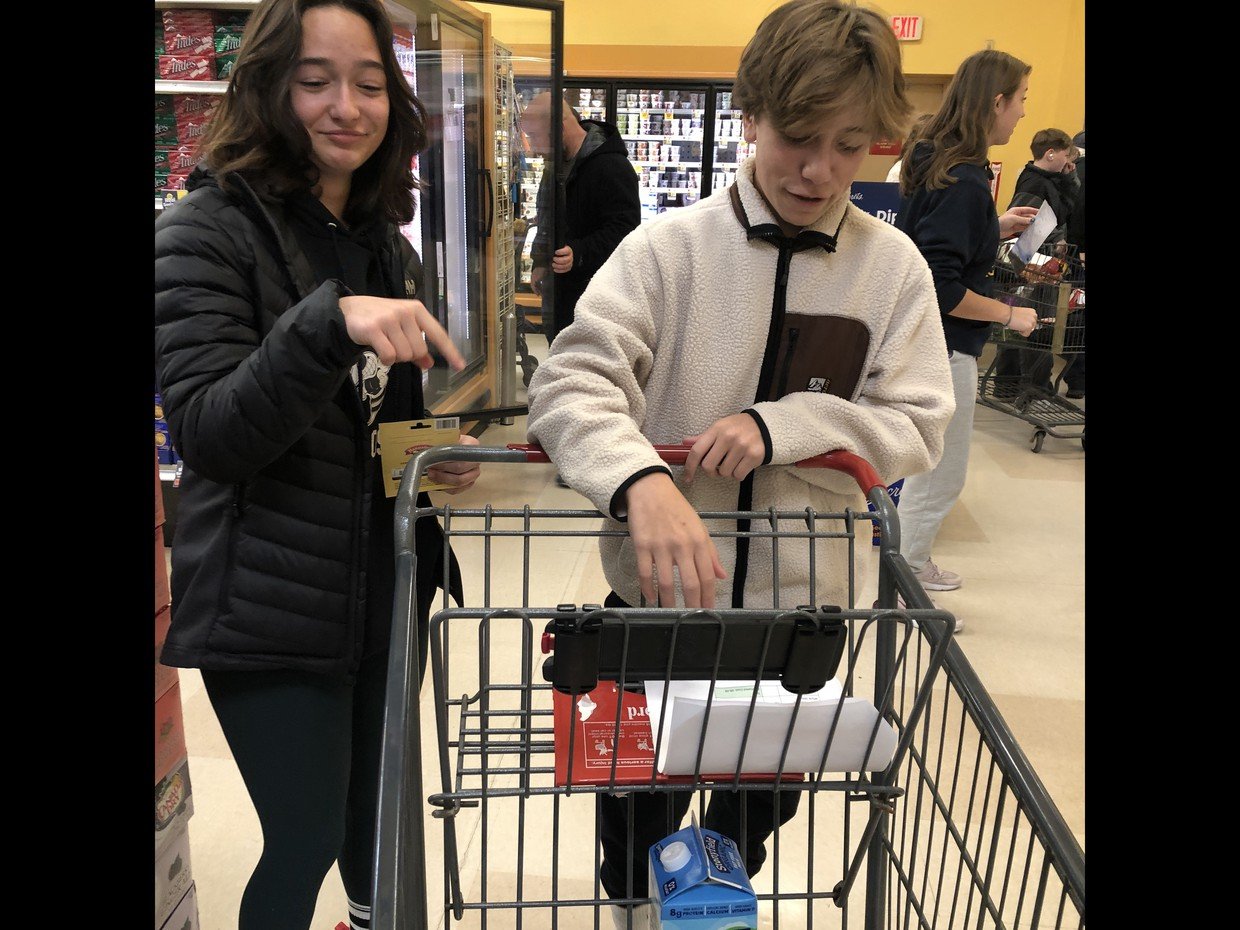
How are the carbon cycle and the issue of food security related? Ask a 9th grader. They’ve been working on an interdisciplinary project this semester that culminated in several days of field work in our community. In Wellness and Modern World, students took the 3SquaresVT challenge where they worked in groups to create a menu within the budgetary constraints of this food assistance program and then analyzed it for nutritional value. This week they shopped at Hannaford’s for these food items and then delivered them to the Upper Valley Haven. Budgeting, learning food prices, menu planning, food access, and community service are all real-world skills students learned through this project.
Additionally, in their Integrated Environmental Science class, students are following their investigation of the nitrogen cycle with a deep dive into the carbon cycle. To see an example of a closed loop carbon cycle, students visited Sunrise Farm to explore nutrient cycling between vegetables and livestock and a community-scale composting system, all situated under solar panels. Farm staff discussed the pros and cons of a CSA system in the context of food access and students dug their hands into a 170 degree compost pile that instantly provided warmth on a windy 25 degree day. Bacteria is kind of amazing.

“I learned that farms and agriculture can be an important part of the solution to addressing food insecurity and supporting the carbon cycle. Farming practices that promote sustainable and efficient use of resources, such as composting and cover cropping, can help to increase the productivity of the land and reduce negative impacts on the environment.”
Vermont legislative pages 2023
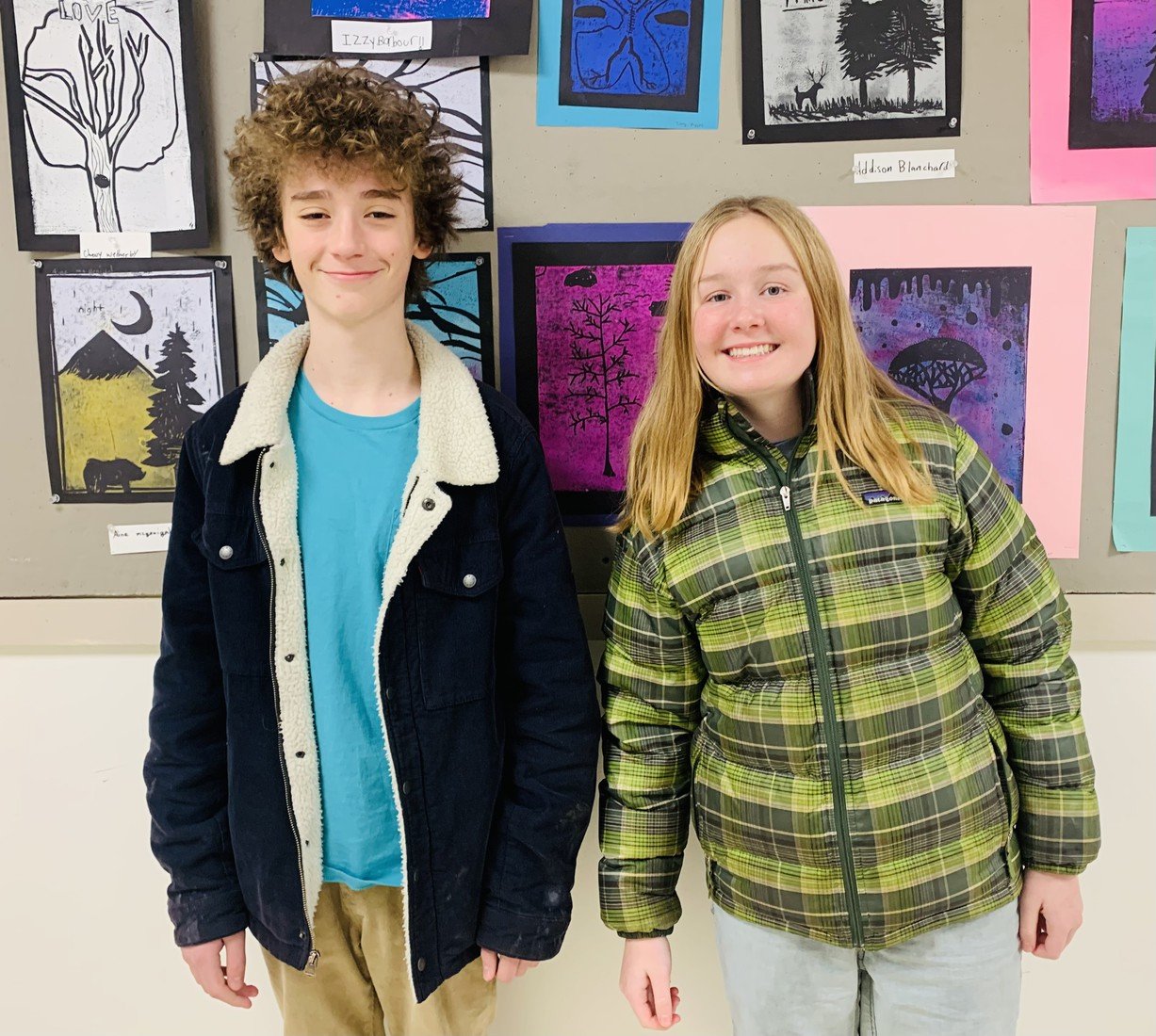
Each year, thirty eighth grade Vermont students are selected by the state to work as Legislative Pages in the Vermont State House. We would like to congratulate our Woodstock pages for 2023, Adelle Danilchick and Nicholas Cellini!
The pages live and work in Montpelier for 6 weeks during the legislative session, providing support for members of the Senate, House of Representatives, and various legislative offices. Serving as a page offers a unique opportunity to observe the workings of the legislature and to witness in person the often historic events in our state capital.
Students visit the Hall Art Foundation

On Friday, November 18, twenty-two students and three art teachers visited the exhibitions at the Hall Art Foundation in Reading, Vermont.
Students in Ms. Gravel’s AP Art History class, Ms. Jimerson’s AP Art class and Ms. Piana’s Painting class toured the exhibits and participated in Visual Thinking Strategies with Mrs. Kaija and Ms. Piccoli who are both docents at the foundation. Charlotte Nunan, an AP Art History student also works at the Hall Art Foundation as a gallery attendant on the weekends, led the discussion about Lois Dodd’s painting May in Vermont, 2007.
In presentations before the visit and while on-site, students learned about Dodd as an observational painter and made connections to landscape painters like Thomas Cole and Paul Cezzane and the inspiration Golub got from Ancient Greek and Roman sculpture and his multi-step process that included applying pigment to the canvas and scraping it off. Ariana Winawer-Stein, a student in AP Art, commented that she “… found the range of styles and mediums thought provoking as each artist utilized different techniques to guide the viewer’s eyes and make us think deeply about the meaning of their paintings.”
Annie Hauze, a student in AP Art, commented on the longevity of the artists’ careers by stating, “Something I found inspirational about the exhibits was how both Leon Golub and Lois Dodd made art their life's work. Dodd is still a working artist at 95, and Golub kept going with his art until his death at 87. You can see the passion for their work in both artists' most recent pieces, and the contrast between their earliest and latest works is fascinating. I love to watch growth through art, and to be witness to a lifetime of an artist's work was an incredible experience.”


PALS students propagate houseplants

PALS Classroom Students have been propagating many houseplants from Arnie's Greenhouse this semester. Recently, the students held an event at the Thompson Senior Center to give away the houseplants to local seniors. They talked about the benefits of having plants in your house and gave tips on how to care for each type of plant.
9th graders study nutrient cycling

Ninth graders have transitioned from a study of biodiversity to nutrient cycling. In quarter 1, students analyzed the biodiversity of real world ecosystems by studying plots of trees in our school’s forest and aquatic macroinvertebrates (small water insects) in the Ottauquechee River.
Students did an amazing job with the collection of macroinvertebrates over a few days and identified the organisms. Their incredible attention to detail and hard work is incredibly valuable because their data is contributing to long-term monitoring of the river. We now have 3 years of macroinvertebrate data and it can help us to analyze the health of the river. If we find macroinvertebrates that are sensitive to pollution then we know that the river is likely to be healthy.
Then students moved on to studying the nitrogen cycle in fish tanks. Students have designed and set up their own microcosms - aquatic ecosystems with plants, small organisms, snails, frogs and fish. They are testing the nitrogen levels daily to see how they change over time. Hopefully they still look this great after 4-6 weeks!


