
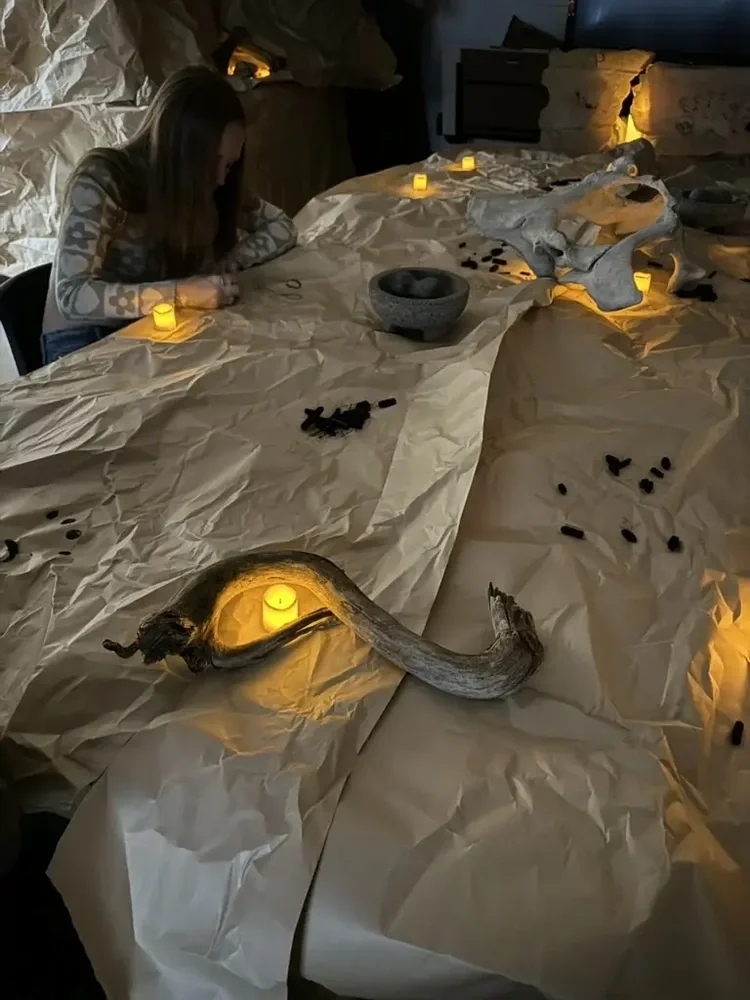
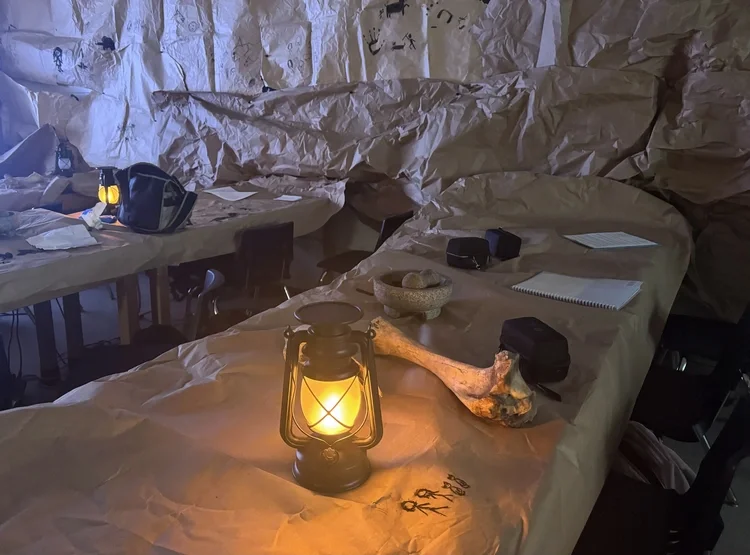
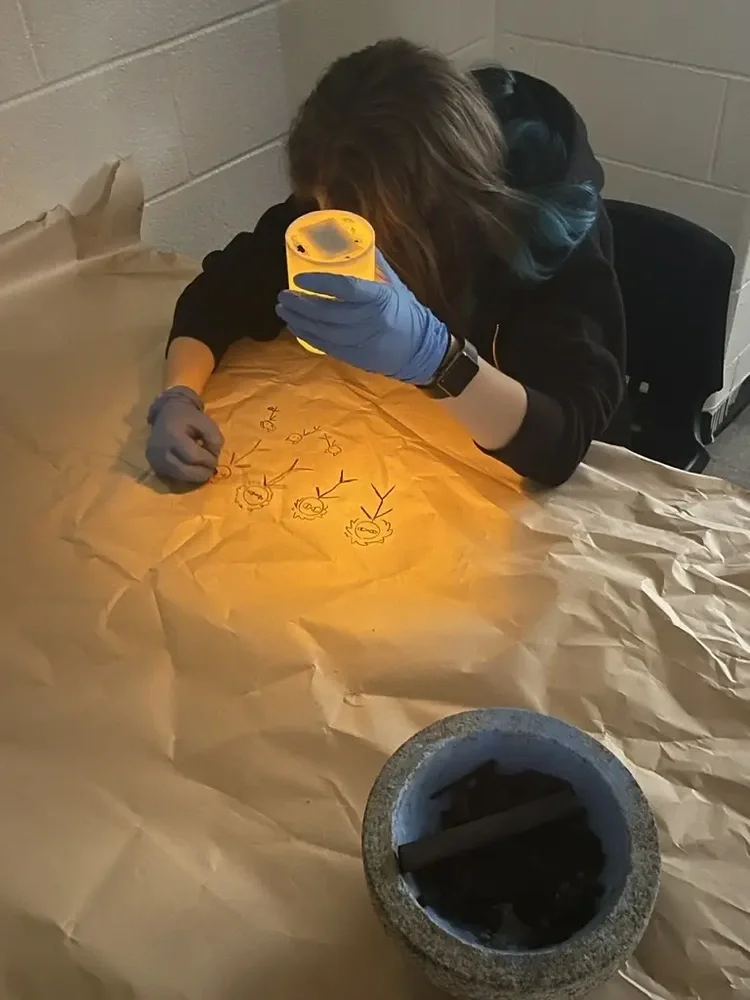
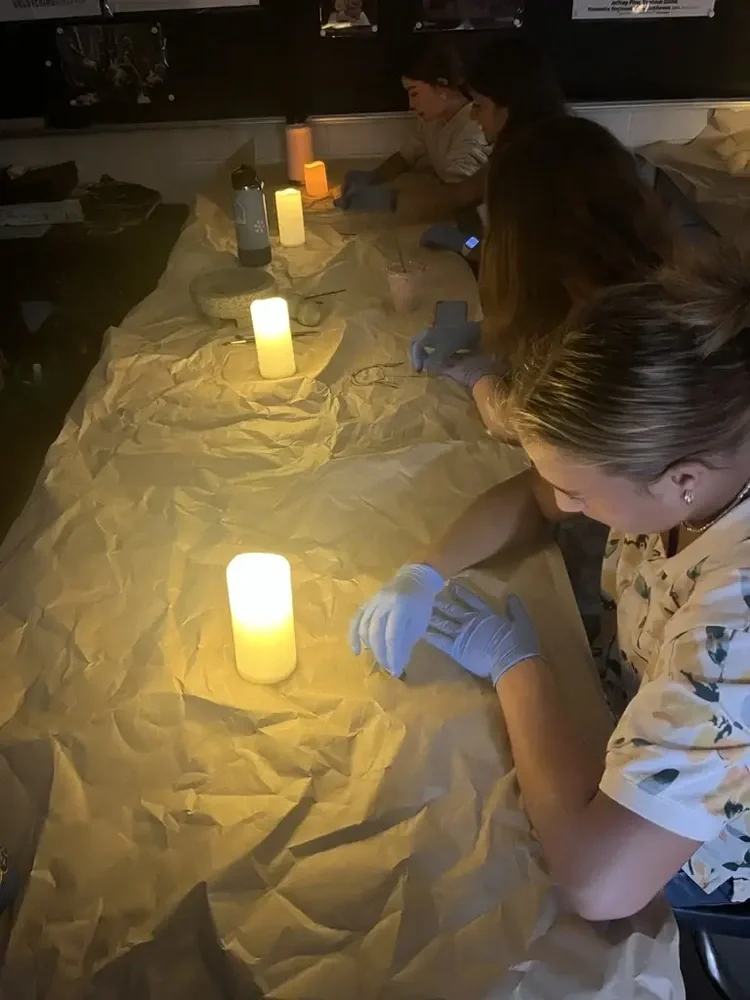
What better way to begin AP Art History than by stepping back in time? On the first day of class, our art room was transformed into a prehistoric cave as students explored art created before the written record.
As we studied these early cultures, we talked about an important idea: the absence of writing does not mean the absence of intelligence, organization, creativity, or complex thought. Long before written histories, humans were making images, creating objects, and communicating ideas through art. This ability to intentionally create and preserve meaning through images and objects is one of the extraordinary characteristics of being human. Art gives us a window into what people valued, believed, experienced, and wanted others to remember.
That is what makes AP Art History so exciting. Students learn to slow down and really look, notice details, question assumptions, make connections, and support their ideas with evidence. Those skills extend far beyond art and history and are valuable for future doctors, lawyers, scientists, and anyone whose work requires careful observation and critical thinking.
And art history doesn't happen only in our classroom! Students have opportunities to experience art firsthand at the Museum of Fine Arts, Boston; The Clark Art Institute; Marsh-Billings-Rockefeller National Historical Park; and the Hall Art Foundation. Seeing an artwork in person allows students to experience its scale, texture, space, and presence in a way a screen simply can't replicate.
Our prehistoric cave was just the beginning. In AP Art History, we don't just learn about the past. We learn to look closely at what people left behind and discover the human stories they still have to tell.