

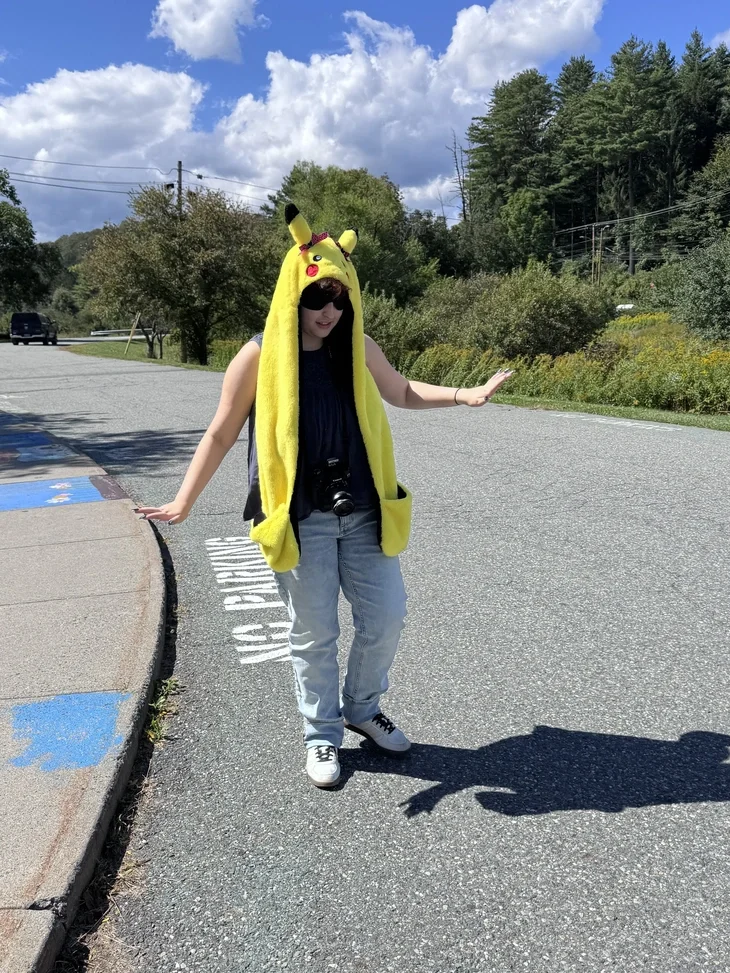
This week, photography students traded their eyes for their other senses!
We began by learning about Pete Eckert, a professional photographer who is completely blind, and exploring the idea of the mind’s eye. His work challenged us to think differently about photography. Does a photographer actually need to see to create an interesting photograph? And is a great photograph always about making a “pretty picture”? Watch the video about his work with Volkswagen here.
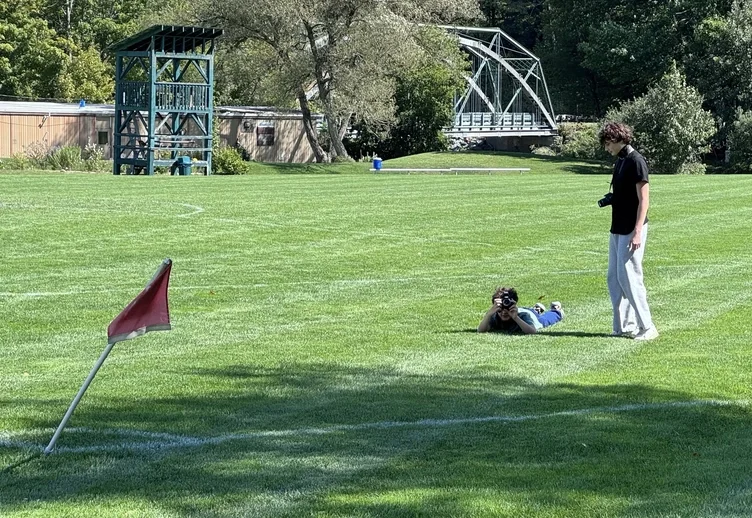
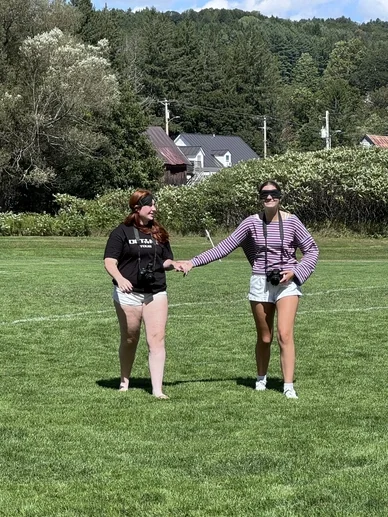
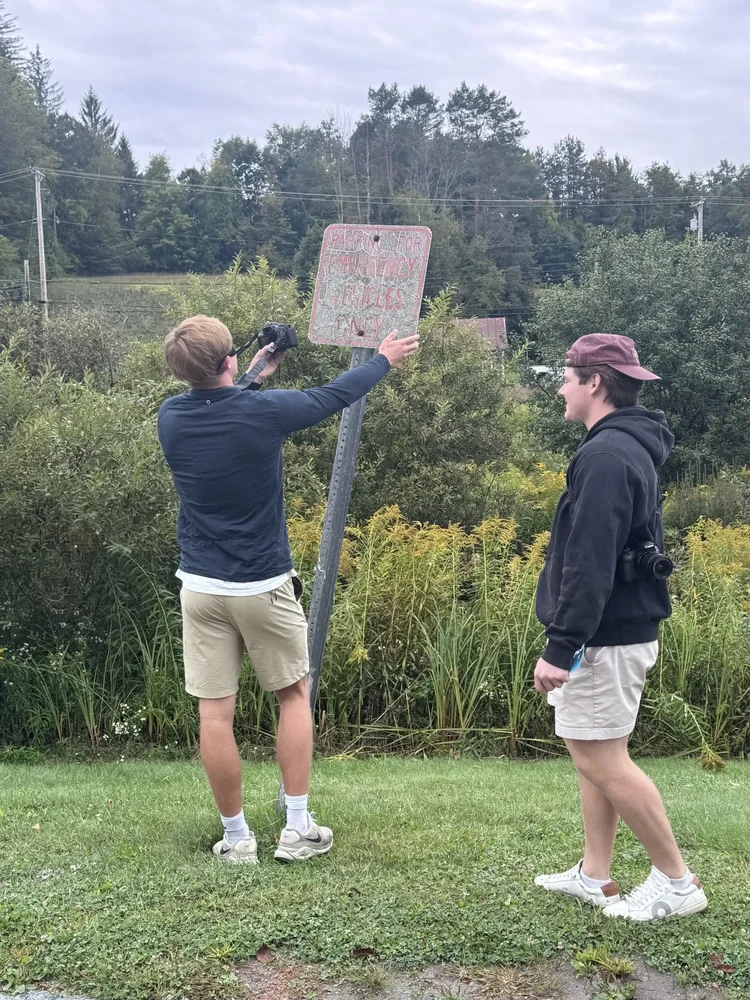
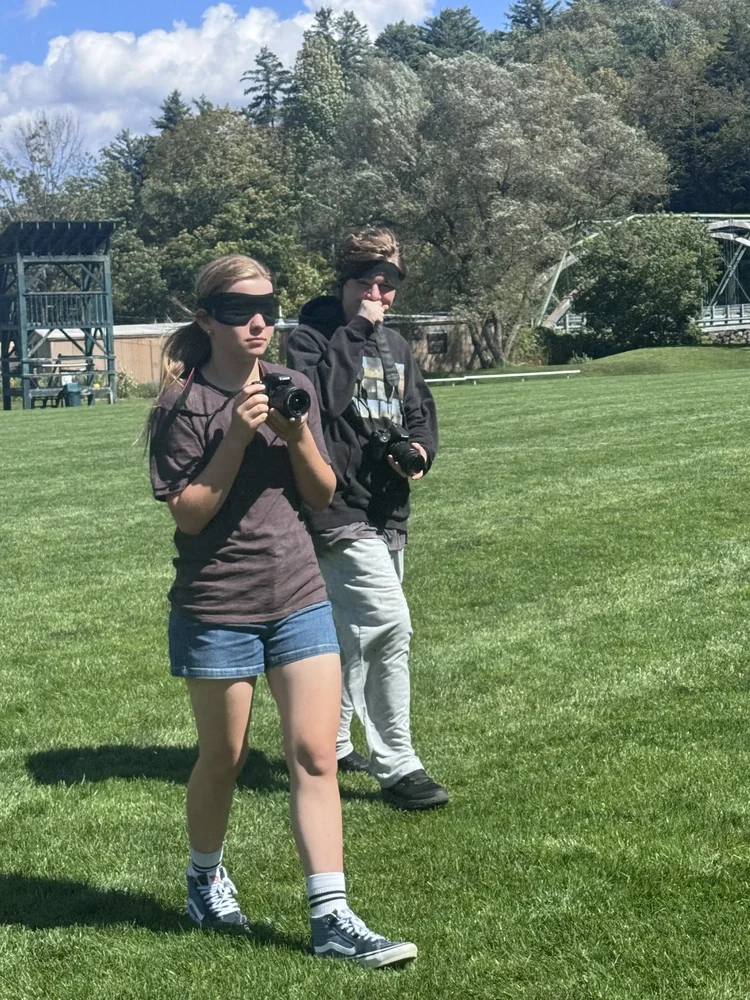
Then it was time to find out for ourselves! Students worked in pairs and took turns being blindfolded while their partner served as a “seeing-eye human” to help them safely navigate the school campus. The photographer, however, was on their own when it came to making the art. Instead of looking for something interesting, students had to listen, feel, smell, and even taste their surroundings, using those sensory clues to decide where to point their cameras and when to press the shutter. The lesson challenged students to experiment, take creative risks, and experience familiar surroundings in an entirely different way.
Most importantly, students discovered that photography is for everyone. Pete Eckert's work reminds us that having a disability does not prevent someone from being an artist. There isn't just one way to experience the world, and there isn't just one way to make a photograph.
Afterward, students looked at what their cameras captured, selected their favorite images, and reflected on what it felt like to photograph without relying on sight. During our critique, we'll even identify which sensory experiences seem strongest in the resulting photographs.
Sometimes taking away the ability to look helps us learn how to really see.