School news
Students take on art heist
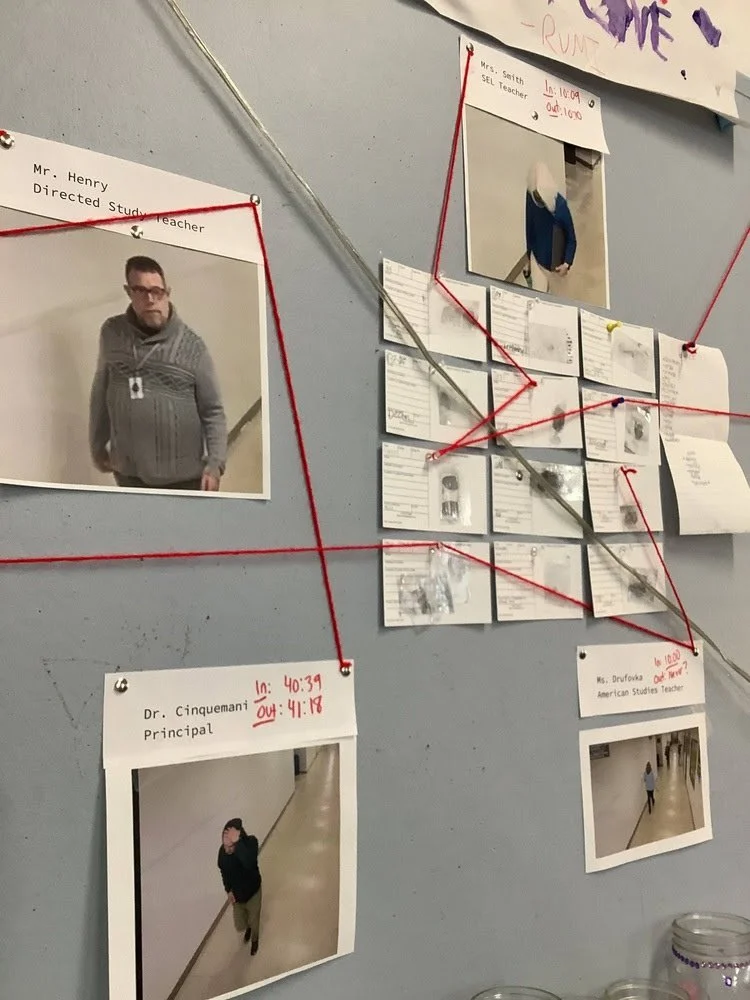
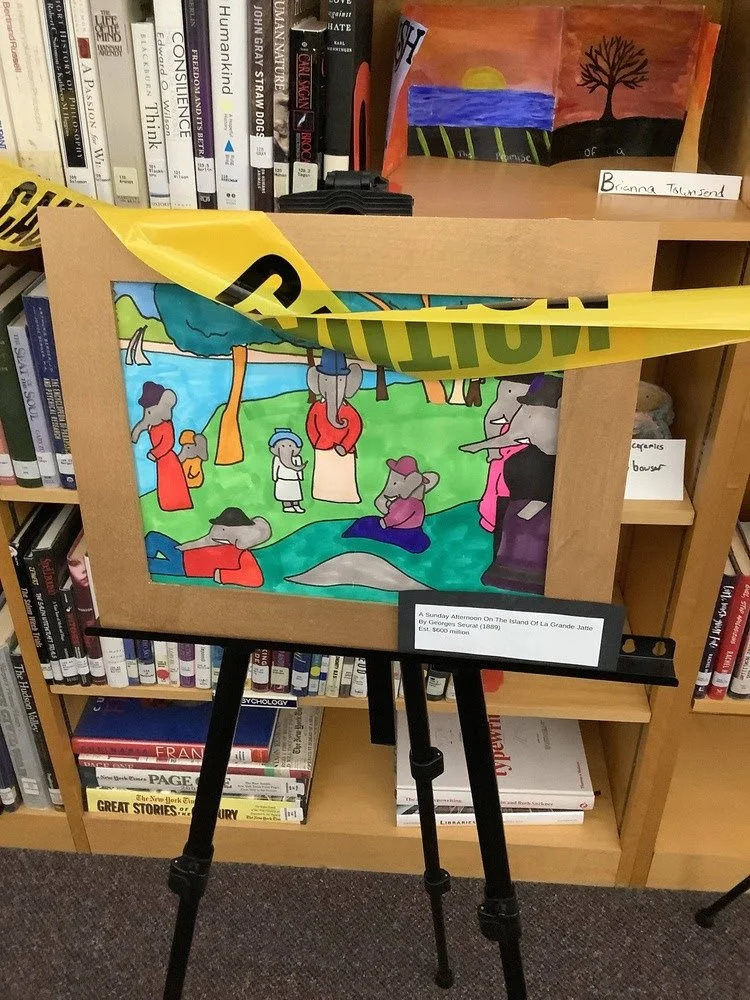
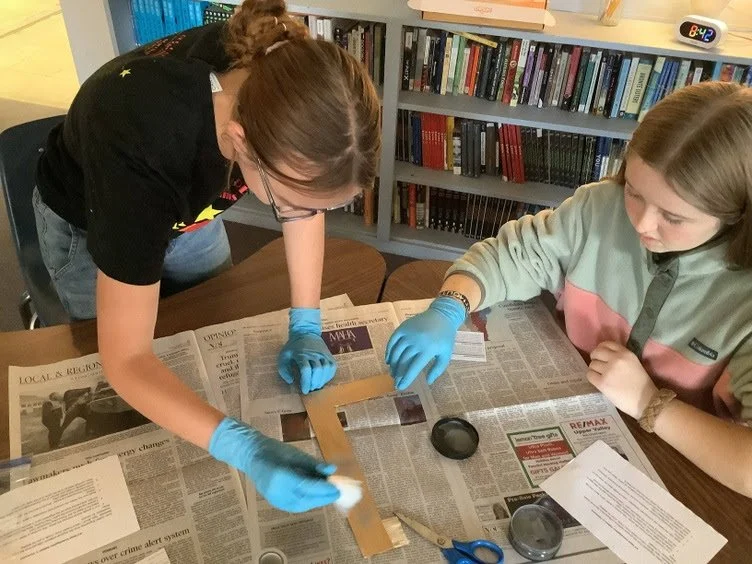
In shocking news this month, our school suffered an immeasurable cultural loss when four priceless works of art were stolen in broad daylight from the Rhoda Teagle Library. The works include The Mona Lisa by Leonardo da Vinci, Starry Night, by Vincent van Gogh, Girl With A Pearl Earring by Johannes Vermeer, and Beneath the Great Wave of Kanagawa by Hokusai.
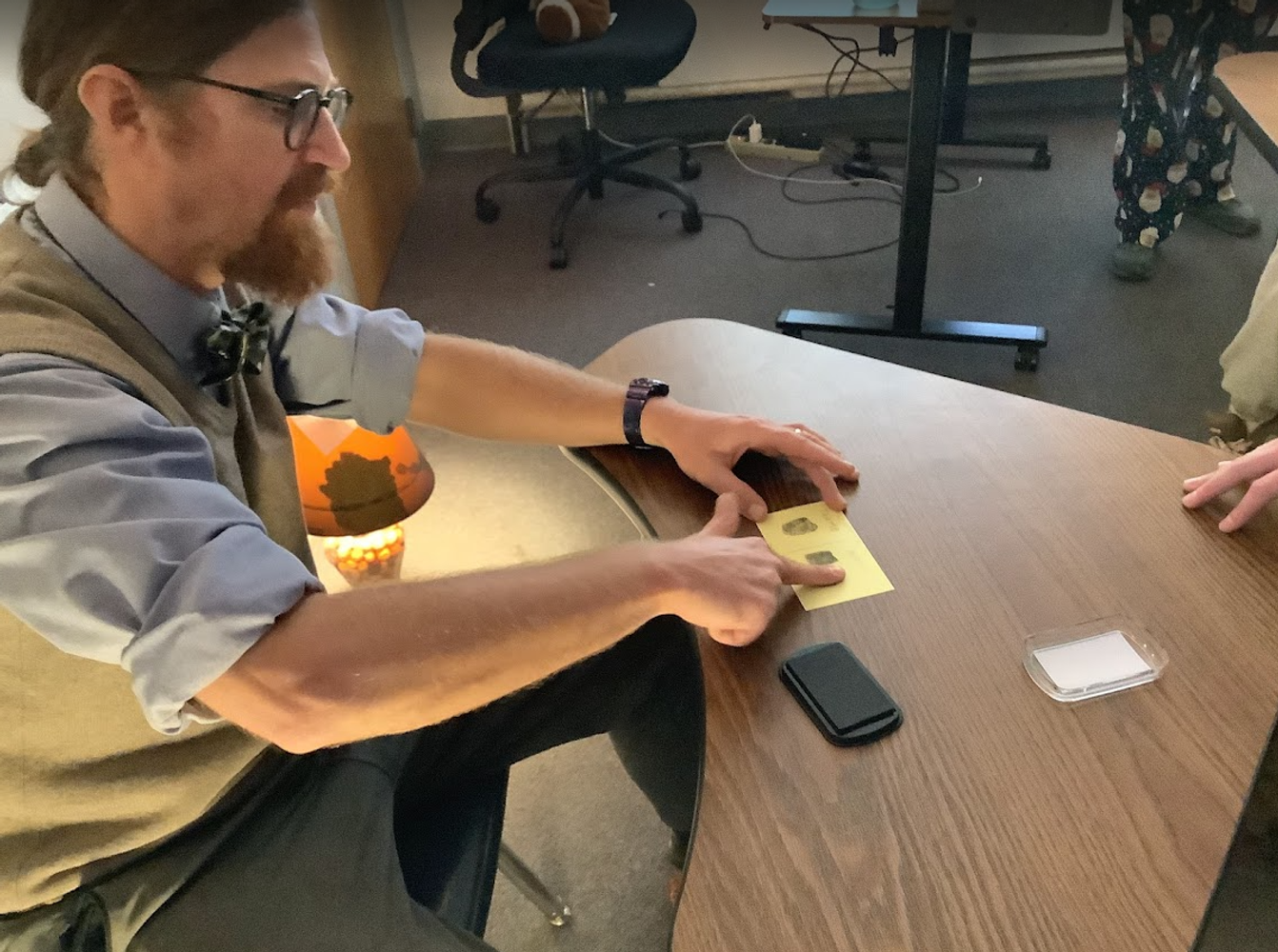
Fortunately, our 8th graders have launched an intense, multi-agency investigation into this brazen heist. They have been analyzing surveillance footage, collecting fingerprints and physical evidence, interviewing persons of interest, and drawing lessons on how to proceed from history, using Nicholas Day's book The Mona Lisa Vanishes, which we coincidentally happened to be reading in English class.
At this time, the students' investigation is active and ongoing. They have narrowed down the list of suspects to 8 individuals in our school community, and I am happy to say that all eight of those individuals are cooperating fully with the investigation, submitting to interviews and fingerprinting.
Over the next couple of weeks, teams of investigators will be reviewing their evidence -- physical, testimonial, and documentary -- and building a case to bring the perpetrator to justice. In the meantime, if you have any information that might aid their investigation, please reach out to any 8th grader. Also, if you see any of these hardworking detectives in the community, please buy them a donut. They need all the help they can get!
When does the holiday season begin?
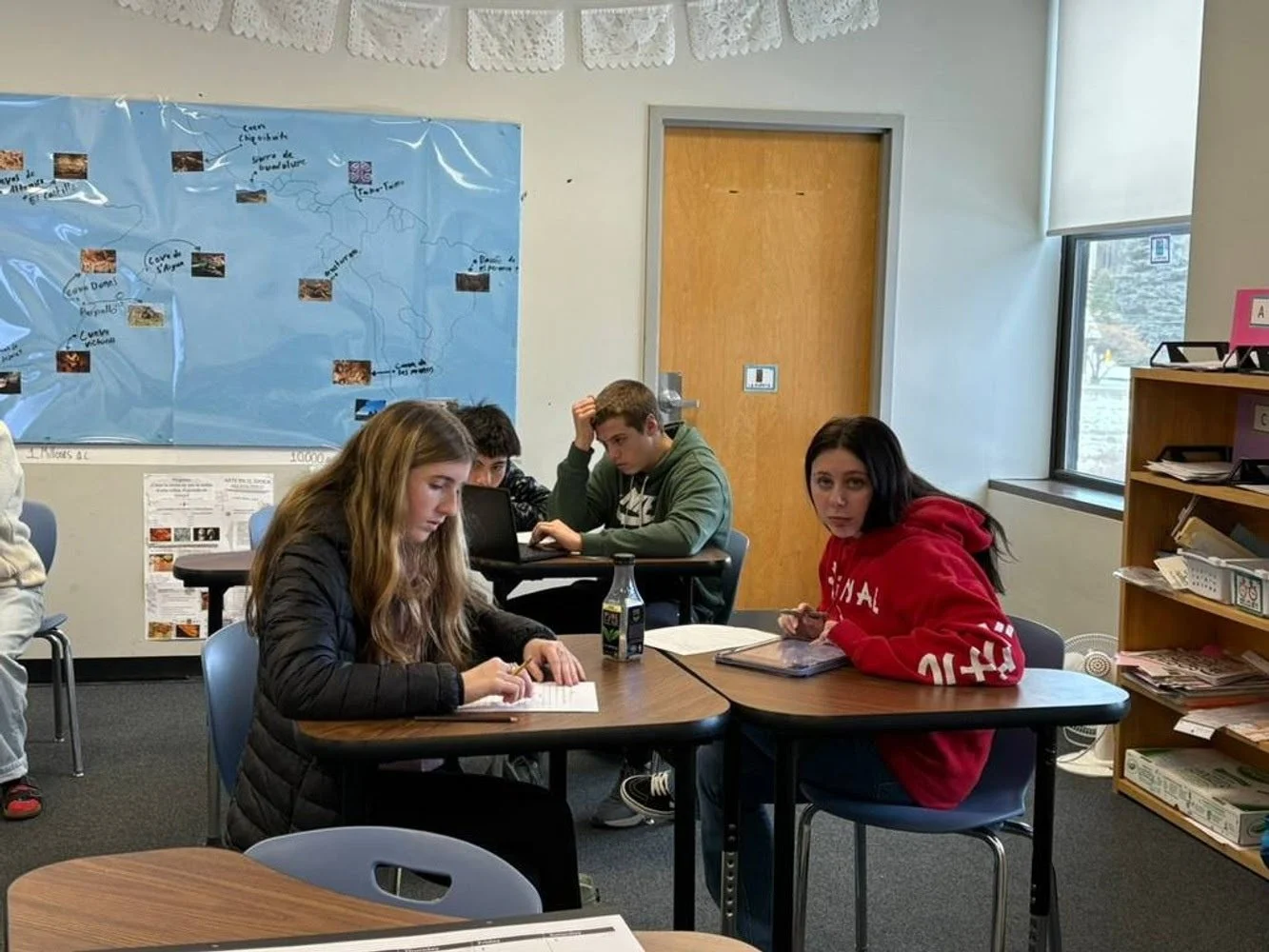
Señora Leibly's Spanish II class is holding a debate to resolve one of the defining questions of our time: does the Christmas season begin before or after Thanksgiving? Working in like-minded groups, students wrote a statement declaring their position on the topic as well as five supporting arguments. In an effort to anticipate what the opposing group might argue they developed five counterarguments and then a statement indicating why each of these is incorrect. The students are doing this completely in Spanish, a big lift at this level of language learning. The spoken portion of the debate will take place in Spanish, too, making this planning all the more important.
Middle School recognized as a School of Distinction
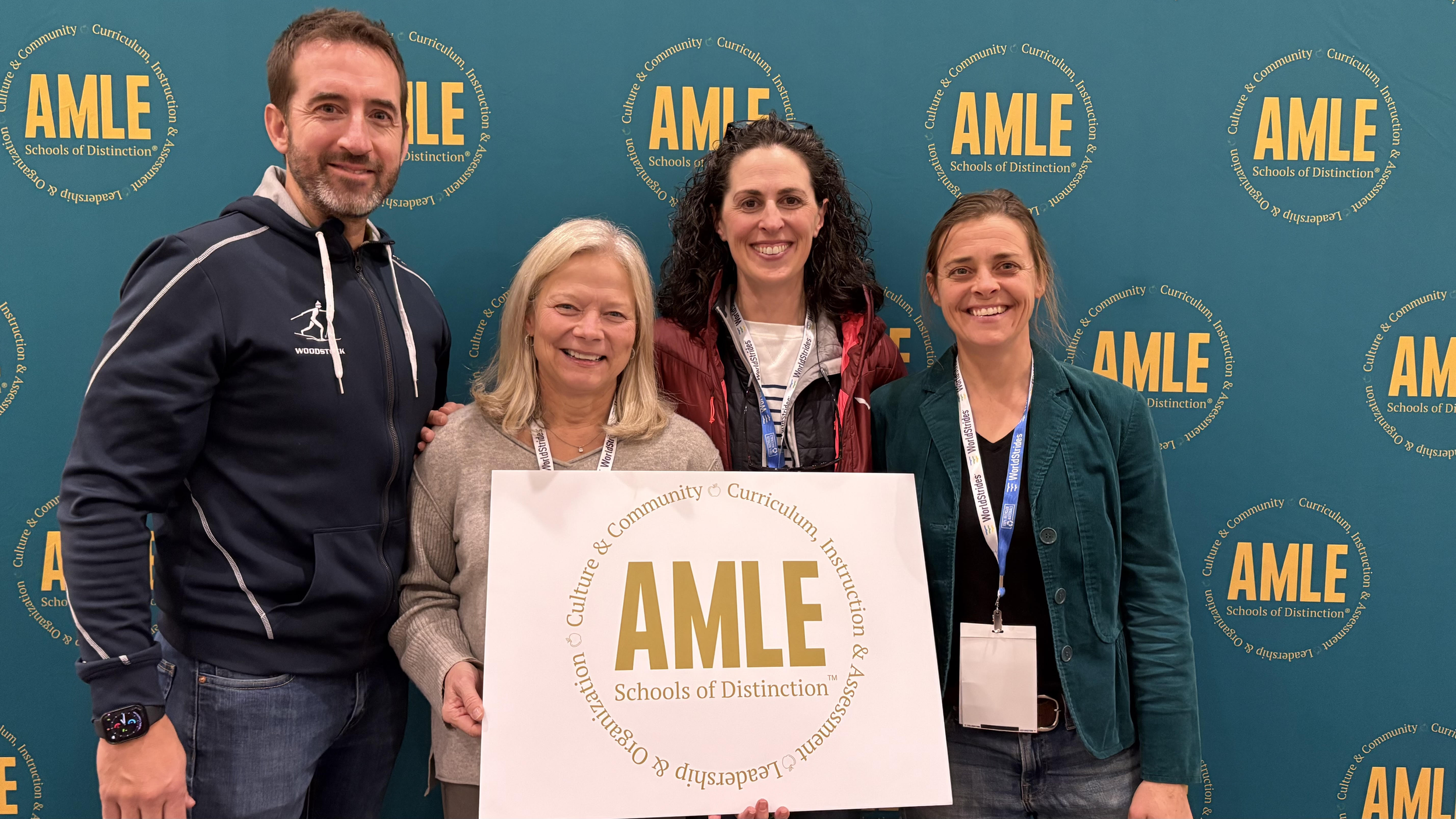
A few of our proud middle school teachers: Dr. Ryan Becker, Anne Lessard, Melissa Fellows, Erin Hanrahan
We're thrilled to share that Woodstock Union Middle School has been named a 2025 AMLE School of Distinction, an honor that recognizes outstanding middle schools worldwide. Only 24 schools across the globe received this recognition from the Association for Middle Level Education this year!
Our school’s AMLE profile, included below, highlights some of what makes WUMS special.
Key Practices
Place-based Education
Outdoor Community Building
Advisory
SEL
Teaming
Shared MS/HS resources
Wide Variety of Extracurricular Opportunities
Integrated Units of Study

Highlights of Exemplary Practices
Essential Attribute: An Education for Young Adolescents Should Be Responsive
At Woodstock Union Middle School, we weave a narrative of responsiveness, where student voice is the heartbeat of our community, driving meaningful change. Students shape their learning environment by influencing clubs, classroom topics, and vibrant events like the Winter and Spring Carnivals. Our diverse electives—ranging from computer programming and robotics to cooking and performing and visual arts—empower students to explore new passions and skills. When students voiced a need for more downtime, we reinstated recess after lunch, supporting their mental and physical well-being. A full-time social-emotional learning (SEL) specialist provides tailored support, while our advisory program, strengthened through professional development led by the Association for Middle Level Education (AMLE), ensures we listen and adapt to meet student needs. This deep commitment to responsiveness creates a school where every voice matters and every student thrives.
Essential Attribute: An Education for Young Adolescents Should Be Engaging
Woodstock Union Middle School tells a story of engagement, fostering a dynamic, hands-on, and inquiry-driven environment where students grow through real-world experiences and meaningful connections. Annual camping trips and student-led carnivals build community and nurture independence, while regular celebrations strengthen our sense of togetherness. In the classroom, students dive into exploration—experimenting with dry ice, constructing Rube Goldberg machines, or studying biodiversity in partnership with a local National Park. Our Innovation Lab, a unique collaboration with NuVu School, empowers students to tackle real-world challenges using cutting-edge tools like 3D printers and CAD software. Integrated projects invite students to explore profound questions about identity, community, and their future, creating a learning environment that sparks curiosity and inspires growth.
Essential Attribute: An Education for Young Adolescents Should Be Empowering
At Woodstock Union Middle School, empowerment is at the core of our mission, enabling students to take charge of their learning and growth as individuals and community members. Through student-led conferences, a wide array of elective choices in arts, technology, and environmental studies, and personalized inquiry-based learning, students actively shape their educational journeys. Goal-setting is woven into core Student's classes, supported by guidance in developing executive functioning skills. We encourage self-advocacy, with counselors readily available to provide support. Leadership opportunities abound, from designing the yearbook to organizing school-wide initiatives like Empathy Week. Clubs such as the Queer-Straight Alliance and Leadership Club foster inclusivity and community, while our unique theatre program and competitive mountain biking bike team celebrate creative expression and athletic excellence. At Woodstock Union, we empower every student to leave their mark, building a vibrant, inclusive community where they are both challenged and supported to soar.
Psychology class visits Dartmouth EEG Study Lab
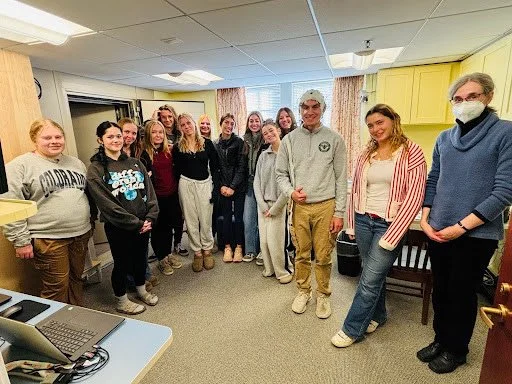
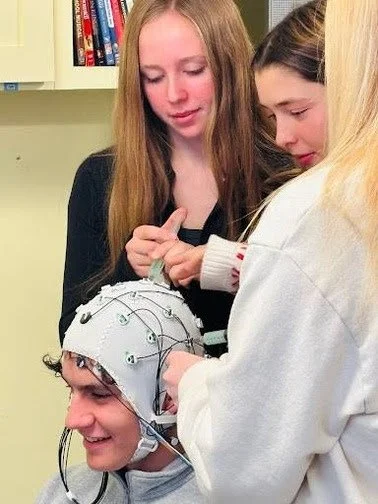
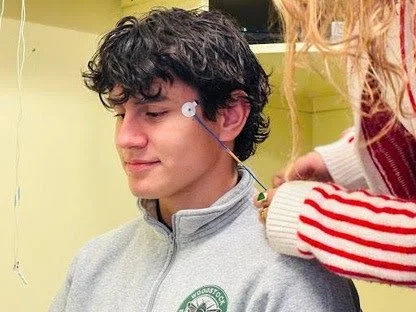
The Psychology Class went on a morning field trip to the Brain Waves Recording Lab at Dartmouth College last Wednesday to visit with Professor Donna Coch and her undergraduate research assistant, Nicole. Students worked with EEG technology as part of our study of the biological bases for behavior. Electroencephalography (EEG) and Electrooculography (EOG) measure the electrical field around the brain and turn it into waves on a screen. EEG doesn’t read minds, but can tell us how active or inactive the brain is while doing certain tasks, or sleeping.
How can this be useful for psychological research? Students suggested:
Comparing introverts to extroverts as they respond to stressful situations
I would experiment with music and see how participants would react to well known and established songs, versus lesser known new releases from more obscure artists…I’m also curious about responses to different genres, and how brain waves would be different depending on if the given genre was rock or classical, or pop or jazz.
Will there ever be a use for an EEG to detect things like dyslexia in an individual?
Take a child who has a hard time focusing vs a child who can pay attention and look at their brain waves to see exactly when the child loses focus: place different stimuli in front of both and see when the child loses focus.
A few student takeaways:
“Psychology includes lots of scientific aspects.”
“The process for EEG scans is still being refined”
“Brain waves during REM sleep is identical to brain waves when you’re awake…Alpha waves happen when you are more relaxed.”
“It was really difficult for Ethan to develop any alpha waves due to his focus.”
“Psychology can be a lot more interactive than I initially realized."
9th graders engage in stewardship & service learning
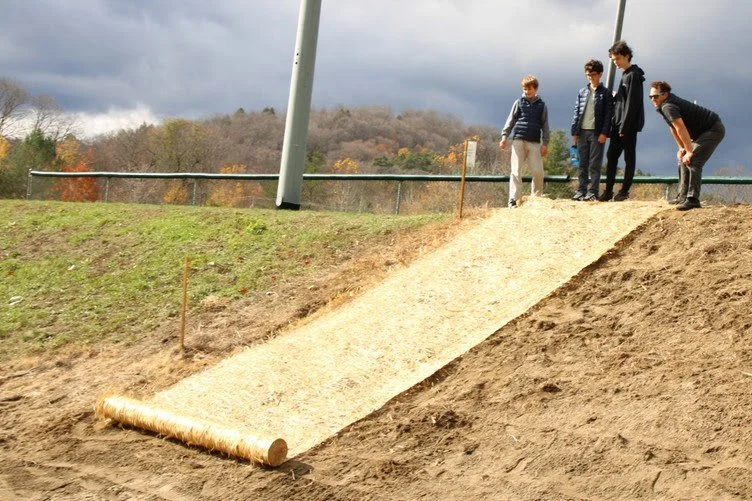
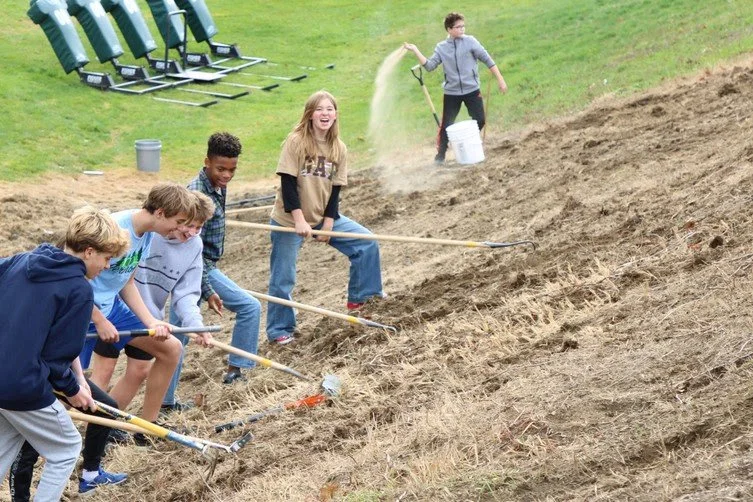
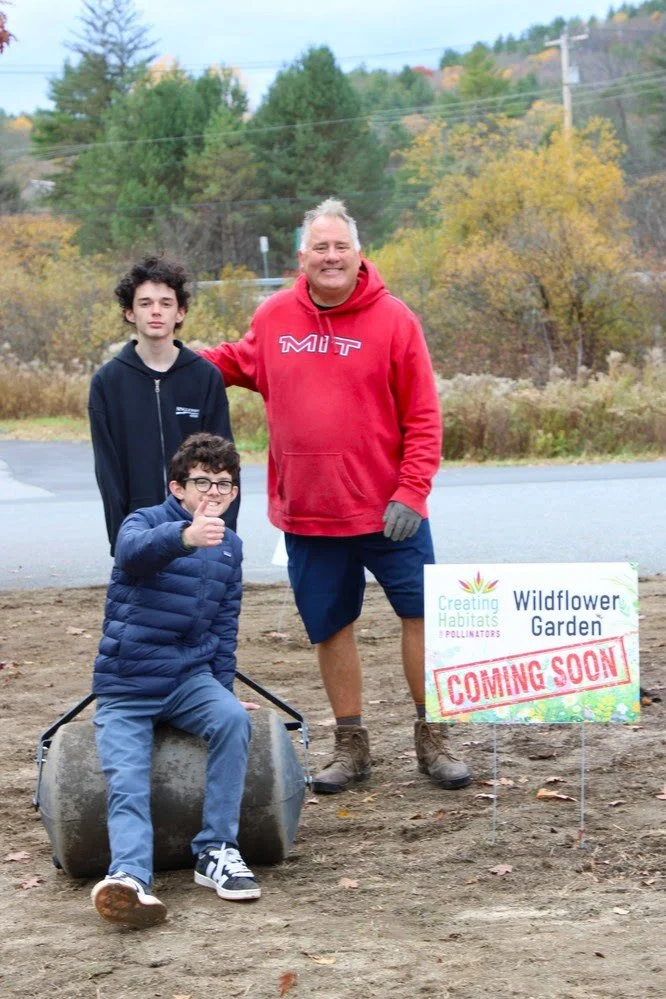
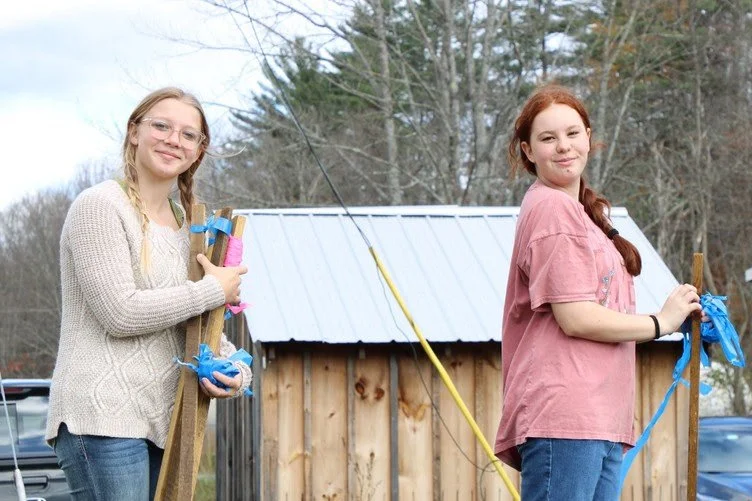
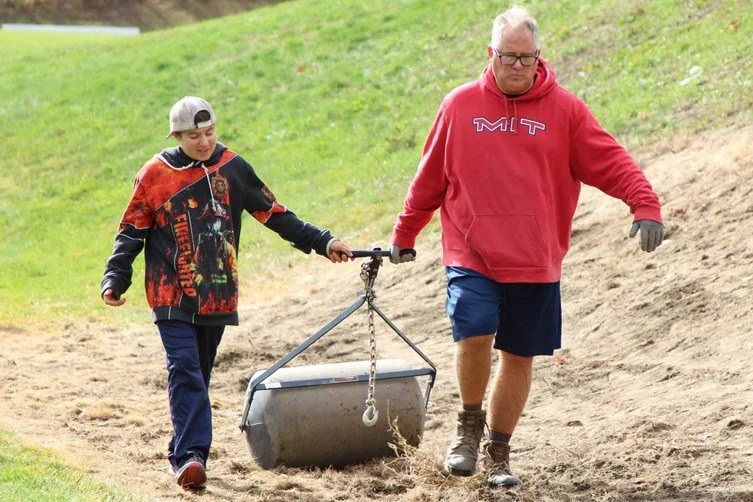
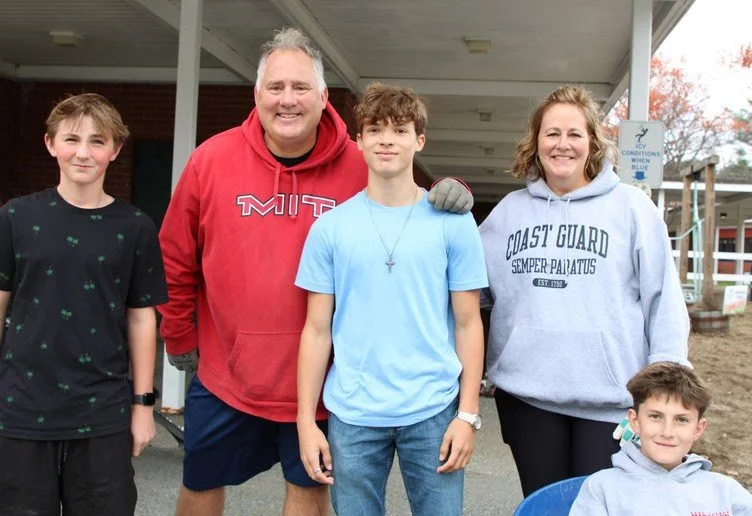
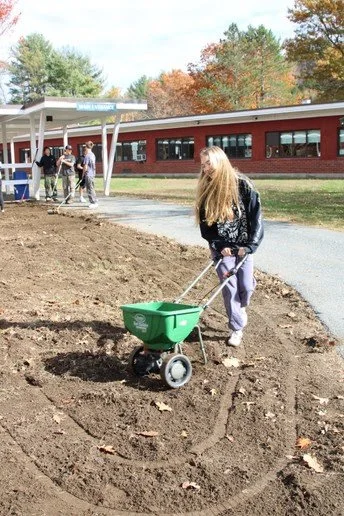
Last Thursday, the 9th grade students completed the final phase of preparing about 16,000 square feet of underused campus land to become a vibrant pollinator habitat. Working with community partner David Hammond, founder and director of Creating Habitat for Pollinators, students helped with the final tilling, then mixed, spread, and rolled native and annual seed mixes that will bloom next academic year. Students also cleaned up the pollinator hedgerow, labeled shrubs and trees, and learned how to harvest native seeds.
This collaborative, student-led project is part of WUHSMS’s CRAFT program and provides an authentic experience in service learning and environmental stewardship.
After the experience, students reflected on something they enjoyed, something they found challenging, and something they thought next year’s students might benefit from. Below are a few quotes that capture the reflection of students:
I really like getting seeds from the flowers and seeing all the different shapes and sizes. One thing that was challenging was separating the seeds from the other parts of the flowers. It was fun. - Sawyer
I enjoyed putting the tags on the plants. I had fun learning the types of plants in the hedgerow. Next year’s students benefit from the amount of pollinators that visit next year. - Heidi
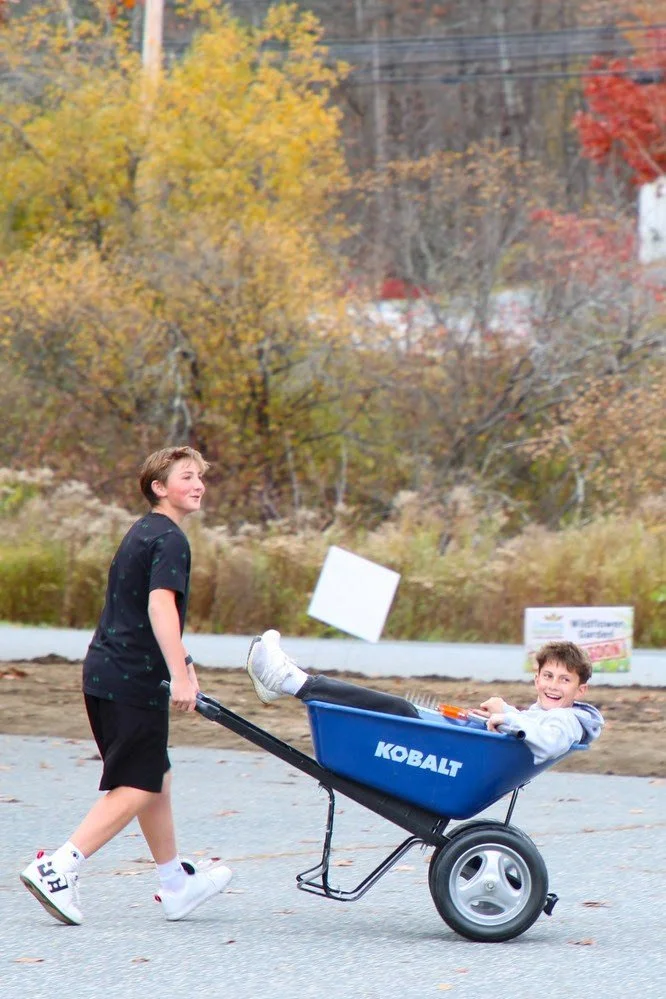
I spread seeds, moved equipment with the wheel barrel, and ended with thatching the hillside. Moving things with the wheel barrel was really fun. I also enjoyed spreading seeds. - Benny
Next year’s students may have the pleasure of enjoying the presence of a higher biodiversity of butterflies. - Vitus
I found tilling to be the most fun because it was with my friends. I found raking the hill next to the football field challenging as it felt like little progress was being made. Next year’s students will benefit by having nice flower beds and a lot more pollinators on our school campus. - Bray
I enjoyed chilling outside and measuring a bit. It was a little hard to set the precise length of the rows [when calculating total square footage]. Next year’s students will have the plants, which will help them study pollinators easier. - Gray
Acknowledgements
This learning opportunity was made possible by David Hammond, Abbie Castriotta, Nick Wolfe, Lauren Sullivan-Justice, Jason Tarleton, Kat Robbins, Janis Boulbol, Kevin Nunan, Keith Brayton, Karen Ganey and Orion Binney, along with the many teachers who contribute their energy to prioritize wellness on our campus. Special thanks to our photographer, Monica Darling!