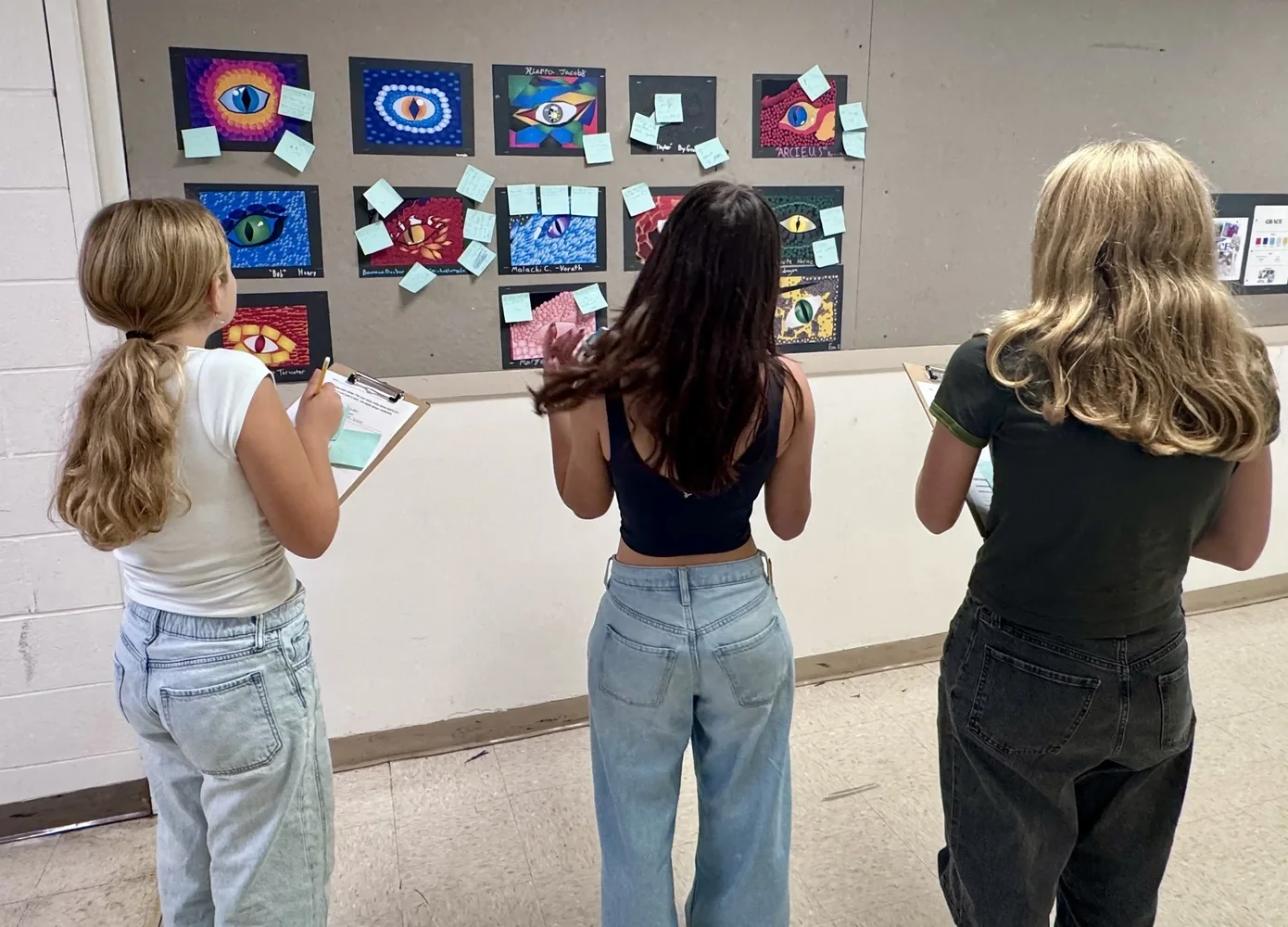
From inspiration to illustration: digital artists at work
Middle School Digital Art students recently completed a project that introduced them to the creative process used by graphic artists and designers. They began by developing mood boards, combining images, colors, textures, and ideas to communicate a particular feeling or visual style. Students then learned how designers extract color palettes from inspiration images and use those colors intentionally to create a unified design.
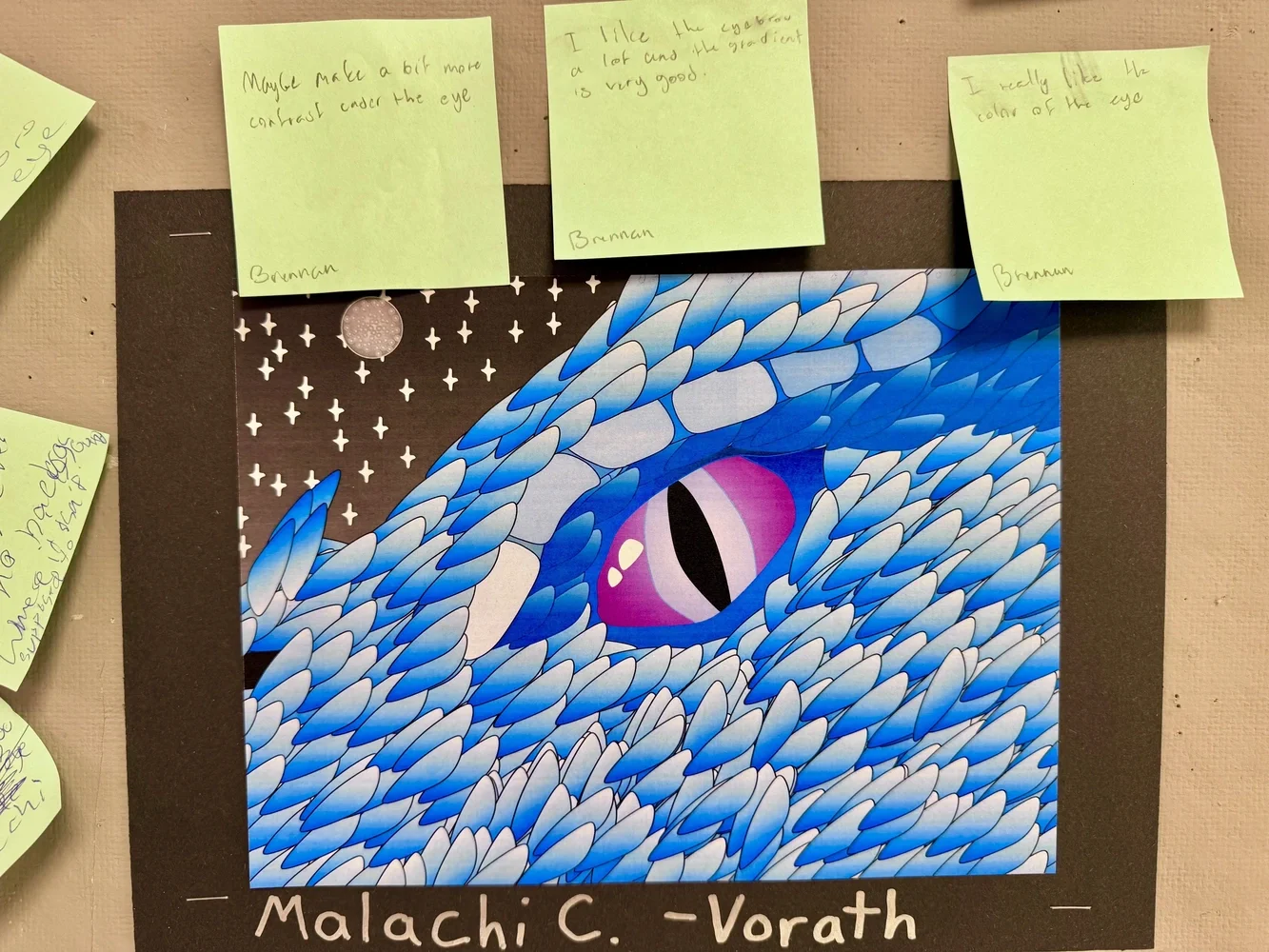
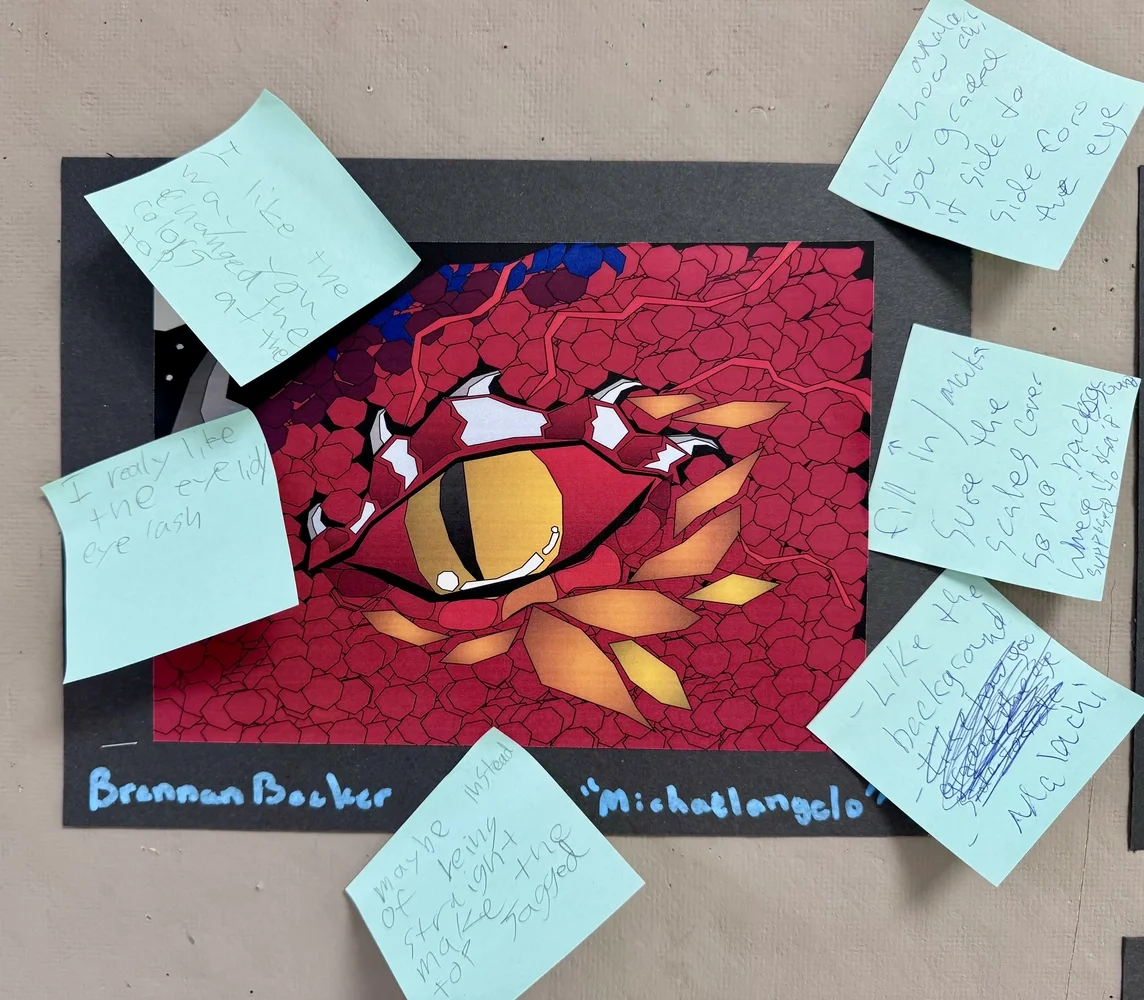
Students applied these skills in Google Draw by creating detailed dragon eyes entirely from simple shapes. They learned to analyze a complex image, break it into manageable parts, and build it one shape at a time. By resizing, rotating, duplicating, grouping, and layering shapes, students transformed basic digital elements into original illustrations. They also used gradients, highlights, shadows, color, and texture to create depth, realism, and personality.
Although the finished dragon eyes are imaginative, the skills behind them have important real-world applications. Graphic designers, illustrators, advertisers, web designers, animators, architects, and many other professionals must plan visual ideas, use digital tools, solve design problems, organize complex projects, and revise their work with care. Students practiced all of these skills while also developing persistence, precision, creative decision-making, and confidence with technology.
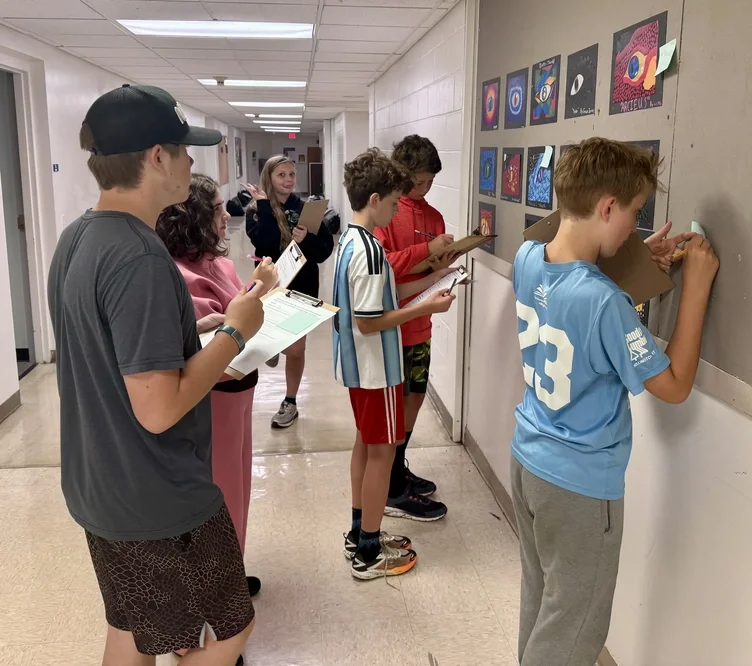
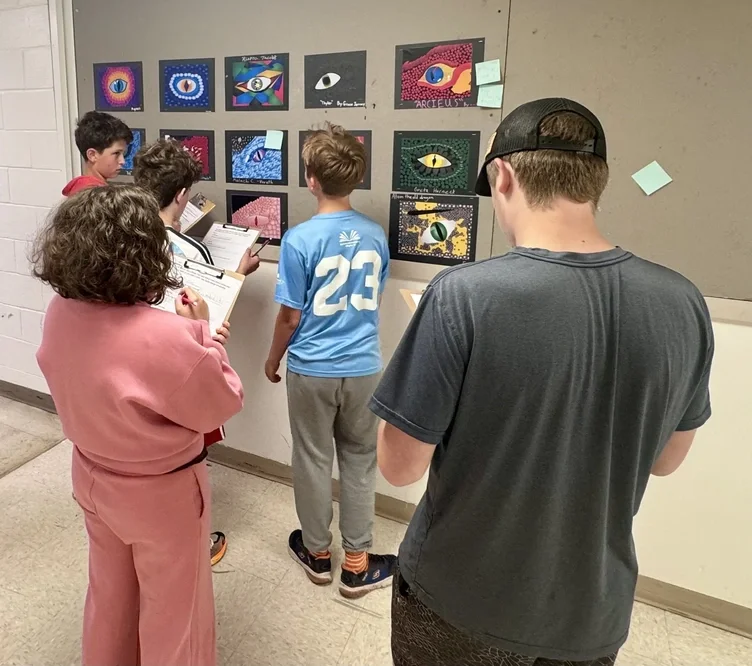
One of the most important parts of the project was learning how to give and receive meaningful feedback through “Two Glows and a Grow.” Students identified two specific strengths in a classmate’s work and offered one constructive suggestion for growth.
This process helped students understand that professional creative work rarely happens in isolation. Artists and designers collaborate, communicate, respond to feedback, and revise their ideas to make them stronger.
The resulting dragon eyes showcase much more than creativity. They demonstrate how digital art helps students become thoughtful visual communicators, flexible problem-solvers, supportive collaborators, and capable creators in an increasingly visual and technology-driven world.